

https://www.ngv.vic.gov.au/exhibition/ngv-triennial/
FIVE GLOBAL THEMES THAT IMPACT THE WORLD: A HOST OF COMMENTATORS: HUNDREDS OF CONVERSATIONS AND IDEAS
Voices is a digital editorial project and part of NGV Triennial.
The name of the project refers to the billions of voices that make up our global community. We wanted to see how the five Triennial themes, of time, virtual, change, movement and body, manifest in the real world, through the voices and practices of people working in fields like medicine, literature, creative arts and critical theory.
To gather a diversity of ‘voices’ from around the world to reflect on these themes, we created an editorial model that began with four theme leaders.
We asked these four people to respond to one of the themes with a long-form essay. We also asked each of them to tap into their own networks to engage a range of other people to also respond to that same theme in any way they wished.
The University of Melbourne has celebrated the interdisciplinary nature of the NGV Triennial with a range of leading academics commissioning new material for this project alongside local and international respondents.
BELOW A SAMPLE OF WORKS LISTED IN THE ORDER THEY APPEAR…
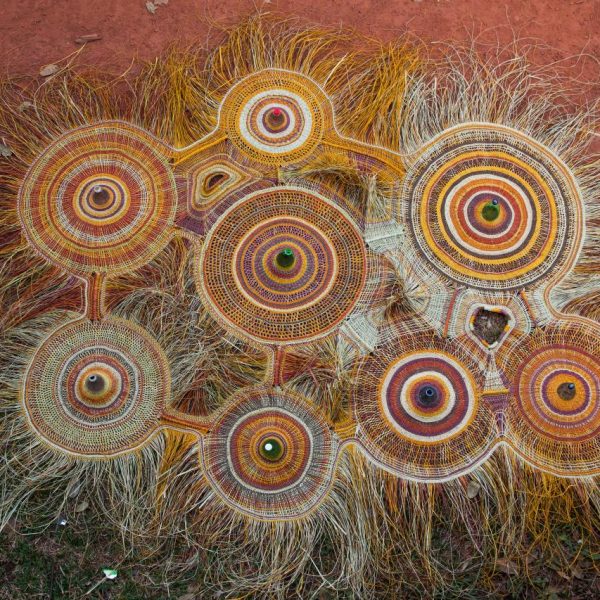
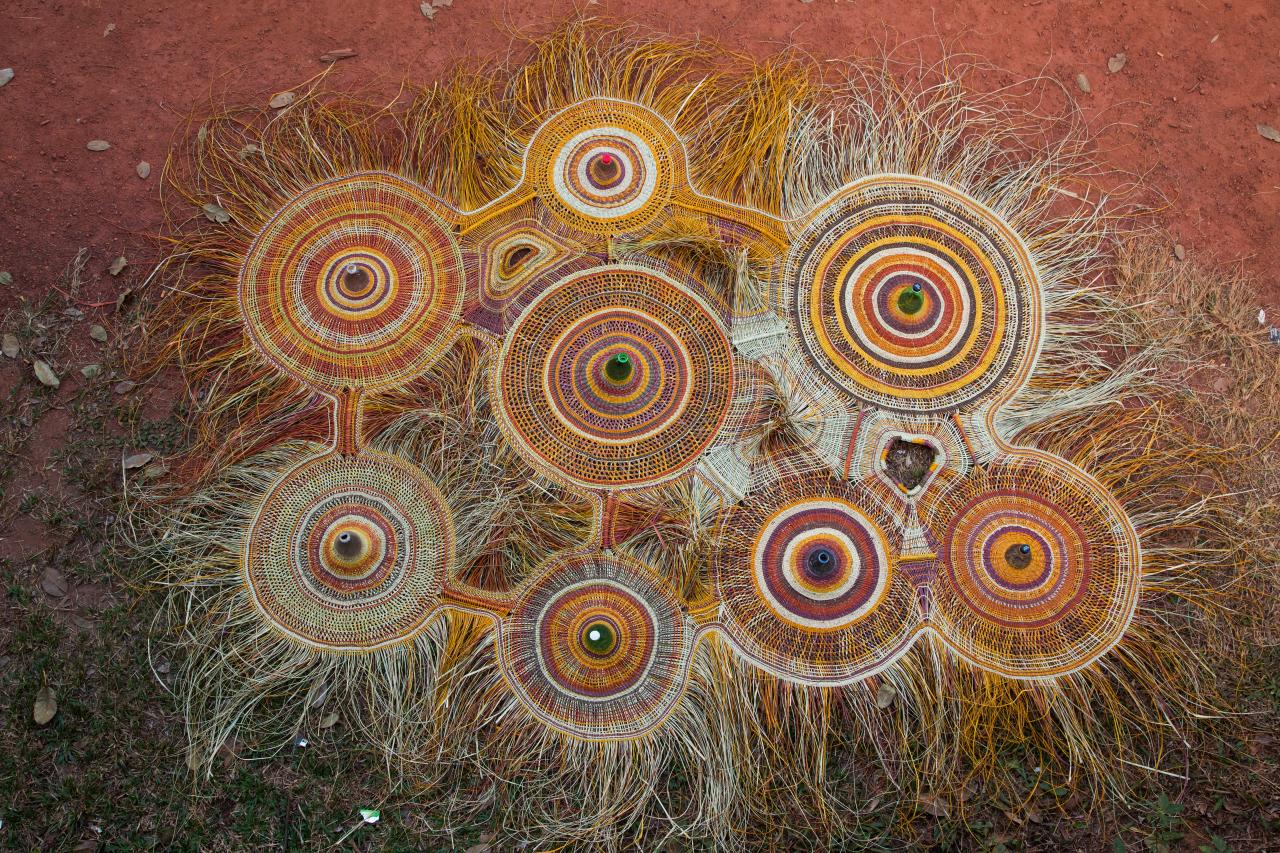
A collaboration between Studio Alvaro Catalán de Ocón and Bula’bula Arts Aboriginal Corporation, PET Lamp Ramingining: Bukmukgu Guyananhawuy (Every family thinking forward) 2016, Commissioned by the National Gallery of Victoria, Melbourne with the support of Vicki Vidor OAM and Peter Avery
Proposed acquisition, Photo: Tobias Titz. In 2016 Alvaro Catalán de Ocón and members of his studio travelled to Ramingining in Arnhem Land to work with a group of Yolngu artists. The collaborative design process, led by Catalán de Ocón, devised a way to join weavings, repurposing traditional Yolngu mats as PET Lamp chandelier. The Yolngu practice of weaving is intrinsically linked to the experience of being a woman, since the knowledge associated with collecting, processing and dyeing the pandanus plant is transmitted from mother to daughter. The combination of many artists’ hands instils in each mat the identity and place specific to each artist, as well as a connection with Country from which the materials have been gathered.
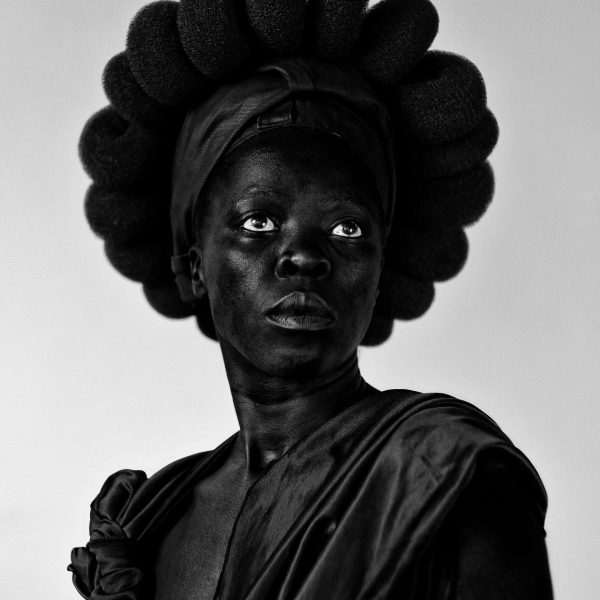
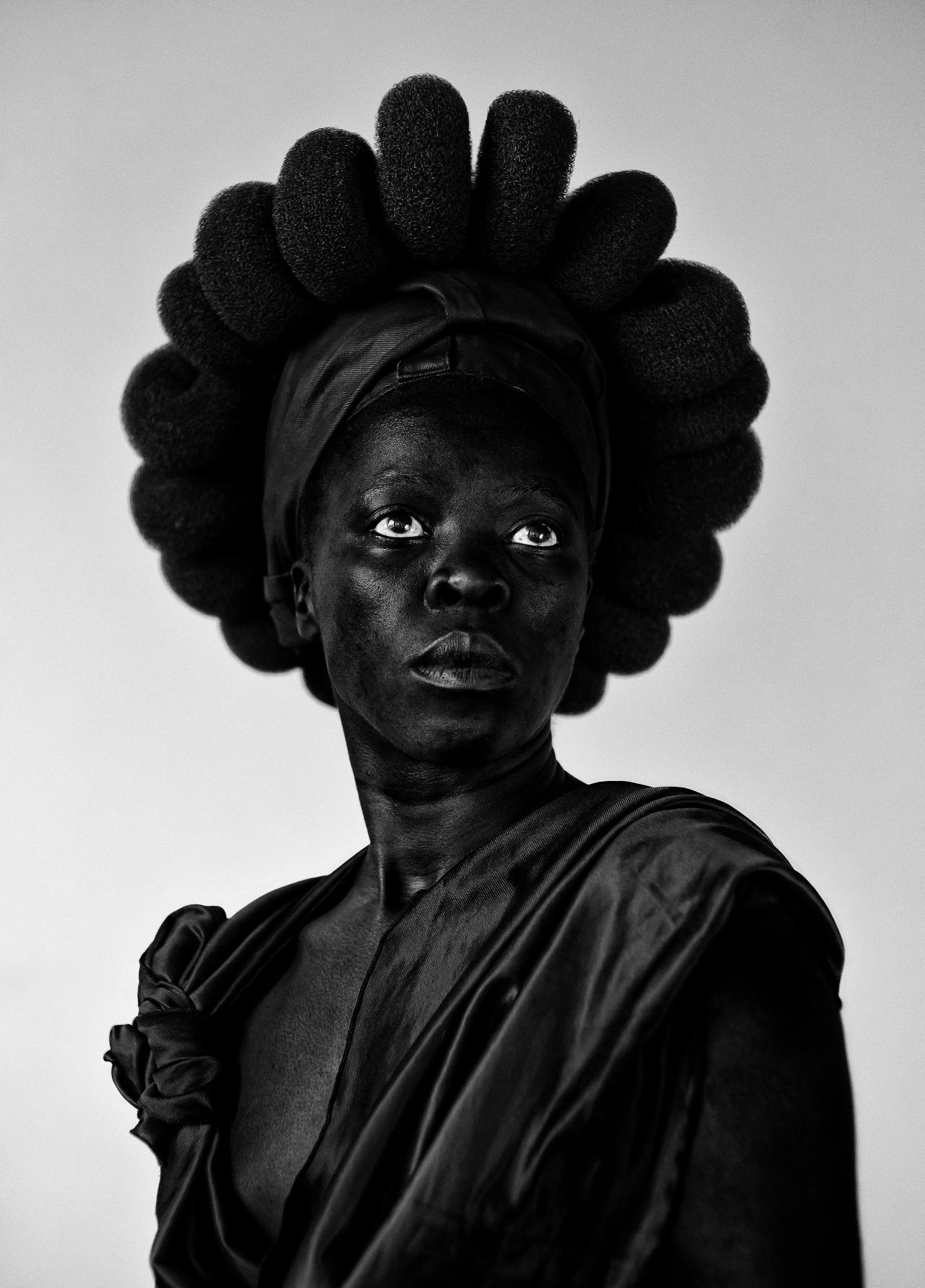
Zanele Muholi, Ntozakhe II, Parktown 2016 (detail), silver gelatin print, 100.0 x 72.0 cm (image). Proposed acquisition, © Courtesy the artist, Yancey Richardson Gallery, New York and Stevenson Gallery, Cape Town and Johannesburg. Zanele Muholi (born South Africa 1972) describes herself as a visual activist. Somnyama Ngonyama, 2015-16, which translates to ‘Hail the dark lioness’, is the first work in which Muholi presents herself as the model. She uses everyday objects as props and simple backdrops to examine concepts of self-representation and the contemporary phenomenon of the ‘selfie’. Muholi has also manipulated the appearance of her skin to appear as a deep, intense black. Discussing this, she wrote: ‘By exaggerating the darkness of my skin tone, I’m reclaiming my blackness’. These photographs are powerful self-portraits addressing issues of race, gender politics and debunking stereotypes of African women.
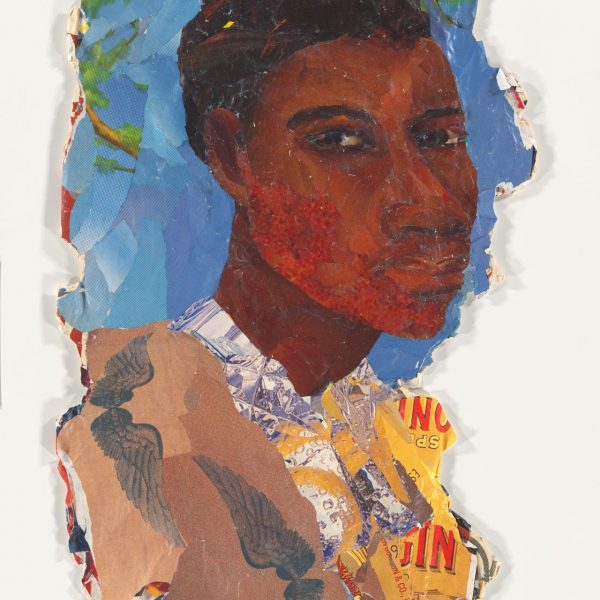
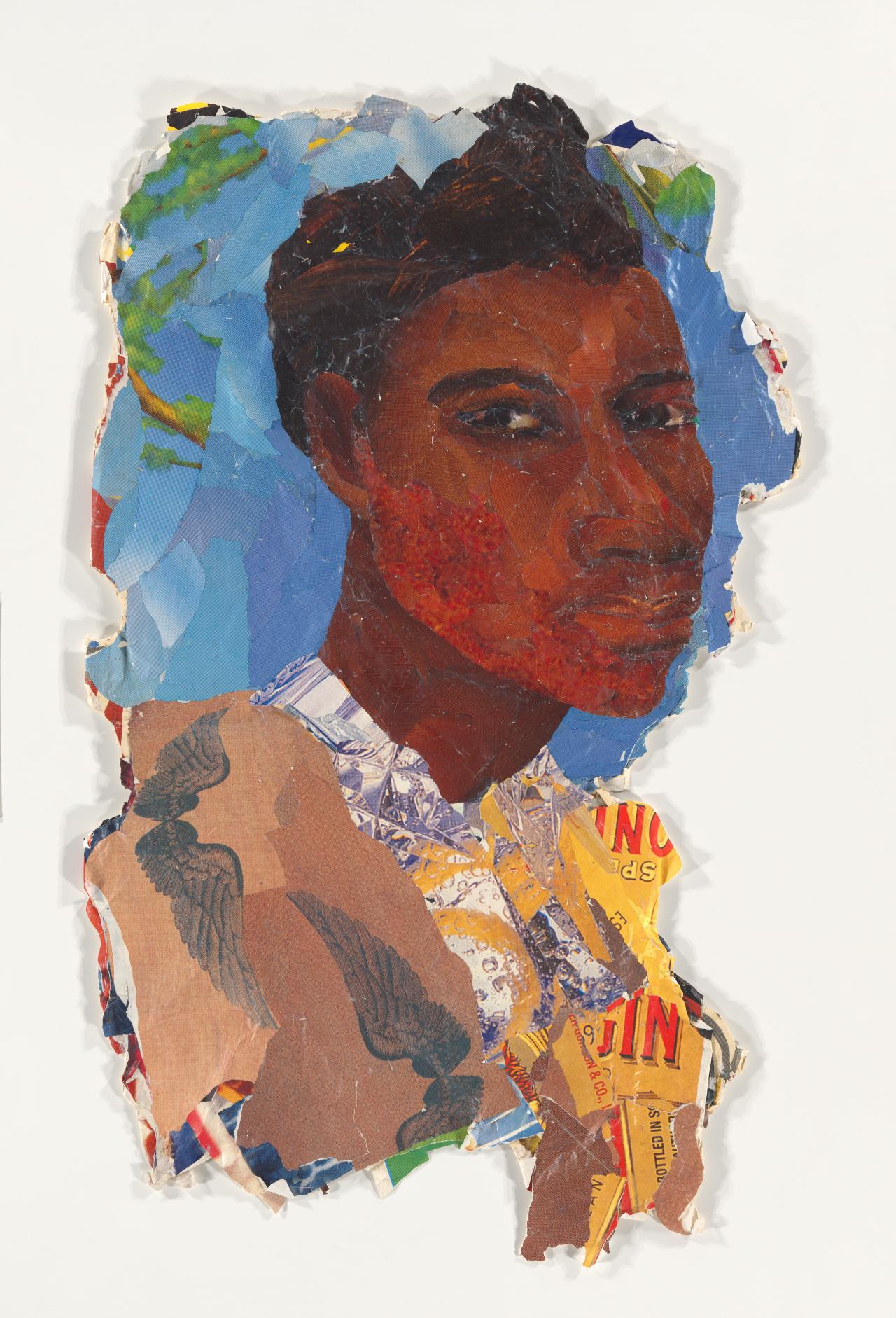
Kay Hassan, Untitled (2014), synthetic polymer paint on collage of torn printed paper, 256.6 x 152.5 cm irreg.,National Gallery of Victoria, Melbourne
© Kay Hassan. Courtesy of the artist and Jack Shainman Gallery, New York. Kay Hassan (South Africa born 1956) has worked in various media including painting, installation, video, sculpture and photography, but he is best known for his large-scale ‘paper constructions’. Hassan creates imposing portraits by shredding billboard paper, and gluing the tattered scraps of commercial advertisements back together to assemble large collages. The portraits and his technique are inspired by the people of Johannesburg. He says that ‘our lives have always been torn and put together – people have always been pushed around. You see it in the streets, in the kids begging, those eyes, the way they look at you’.
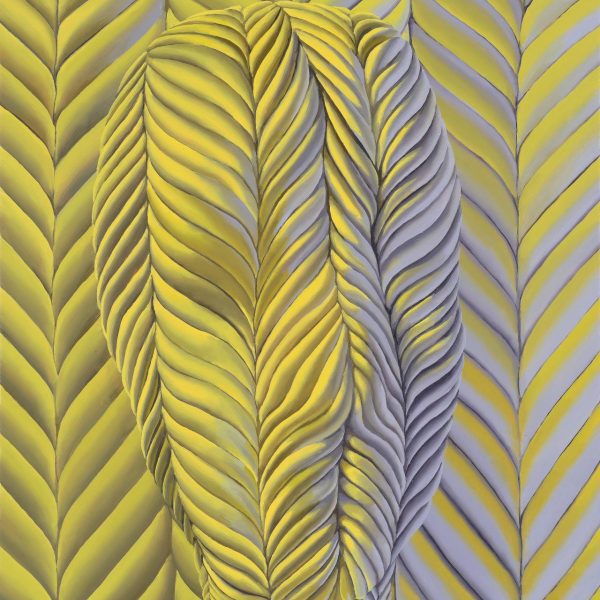
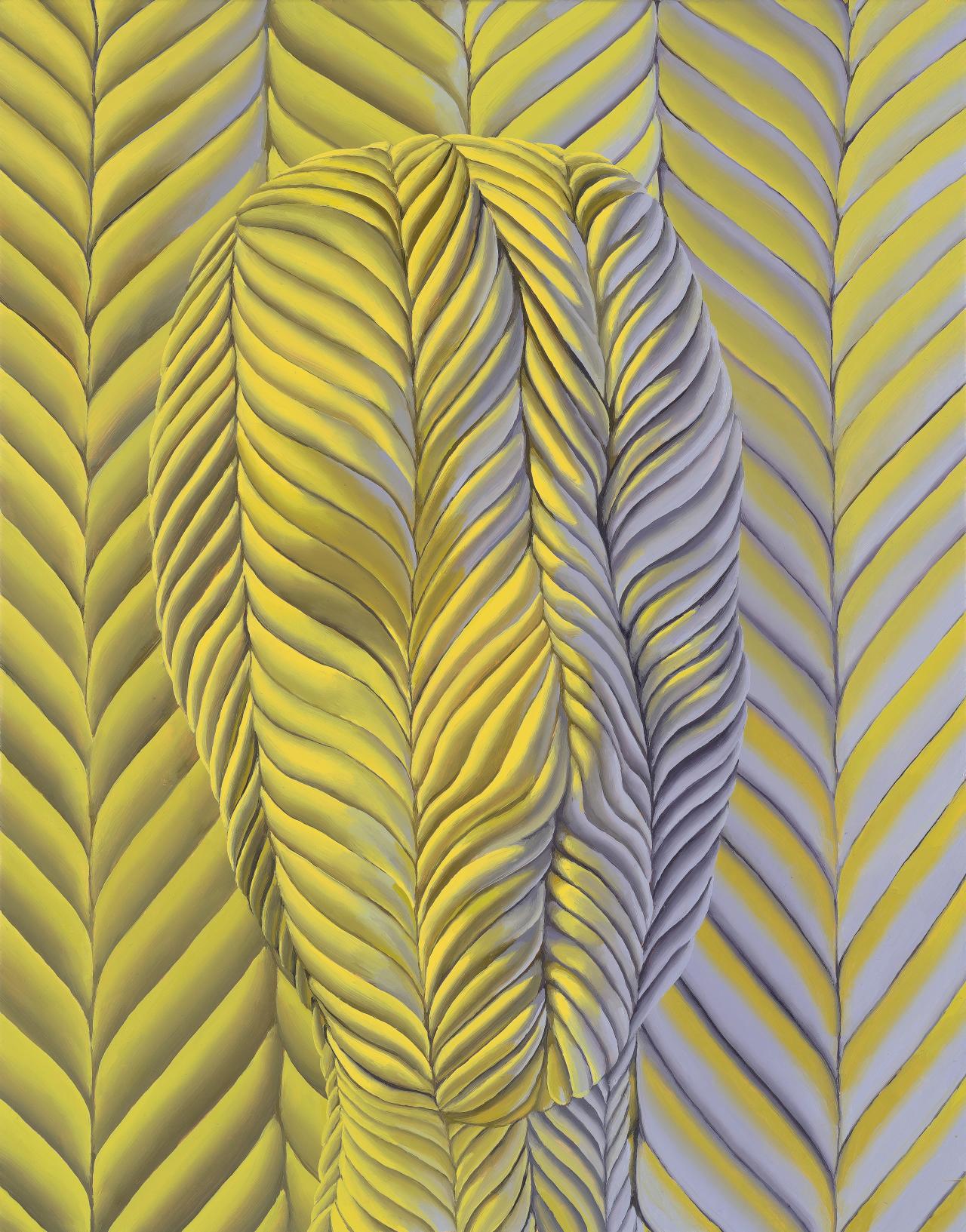
Sascha Braunig,Troll 2014 , oil on canvas on plywood, 38.7 x 30.5 cm, National Gallery of Victoria, Melbourne, © Sascha Braunig. Painted in luminous colours, the dreamlike scenes of Sascha Braunig’s (Canada born 1983) works are informed by the legacies of Op art and Surrealism with their graphic lines and otherworldly figures. The paintings Monad, Saccades and Troll, all 2014, use the conventions of portraiture as a starting point for the creation of strange, humanoid figures the artist refers to as ‘Ur-characters’ or ‘blanks’. Herm 2, 2016, features flowing folds of pink and brown that loosely suggest the form of a human body. Braunig paints from observation of small models, which she fashions from clay, sometimes drapes with cloth and sequins and then illuminates with dramatically coloured lighting.
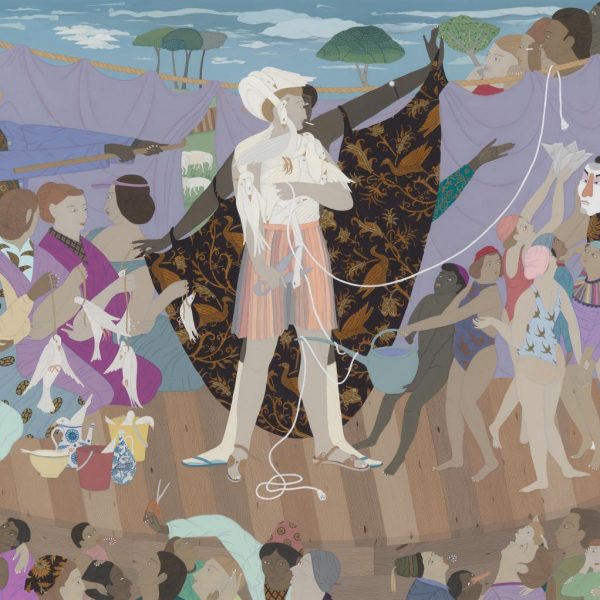
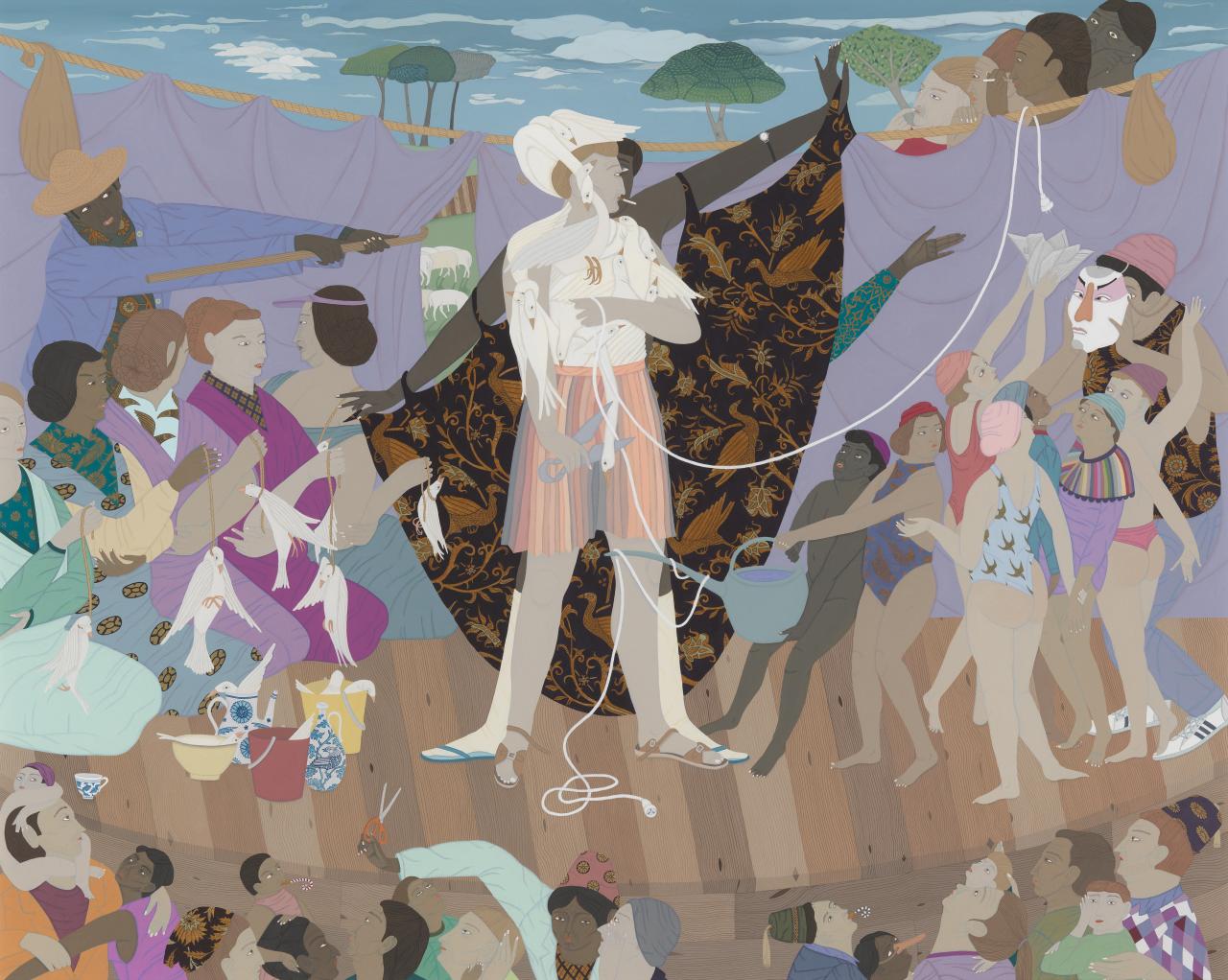
Kushana BUSH, Maybe the people (2015), gouache, metallic paint and pencil,image) 84.0 x 97.3 cm (framed), National Gallery of Victoria, Melbourne, © Kushana Bush. Kushana Bush (New Zealand born 1983) considers herself a contemporary storyteller. She paints highly detailed multiple-figure compositions in which enigmatic and often violent narratives unfold. The critic David Eggleton has described her style as ‘eccentric historicism’. Bush draws on various historical and stylistic sources, from medieval Christian art to Indo-Persian miniatures and Japanese woodblock prints. In each scene, the joyous colour and decorative quality is undercut by a pervasive sense of threat and claustrophobia that derives from the crowded compositions and the actions and gestures of the figures. Kushana Bush has said of her work that ‘borrowing and adapting imagery, not of my time or place – and crucially, getting it wrong – somehow produces pictures that speak of the here and now. I’m very attracted to that cycle of collapsing interpretations, it keeps you yearning’. In many of her images Bush depicts groups of people on a stage, with some directly involved in the action, while others look on. She sees this as a metaphor for watching world events from Dunedin, New Zealand, describing herself as one of the ‘lucky observers, who lick ice creams while the world implodes’.
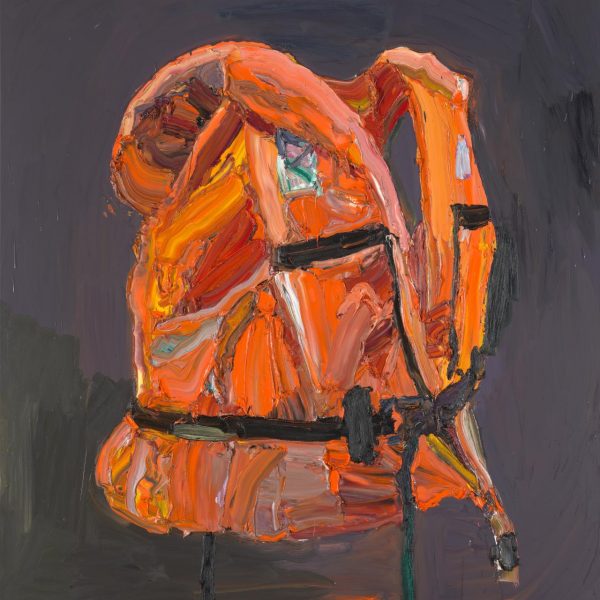
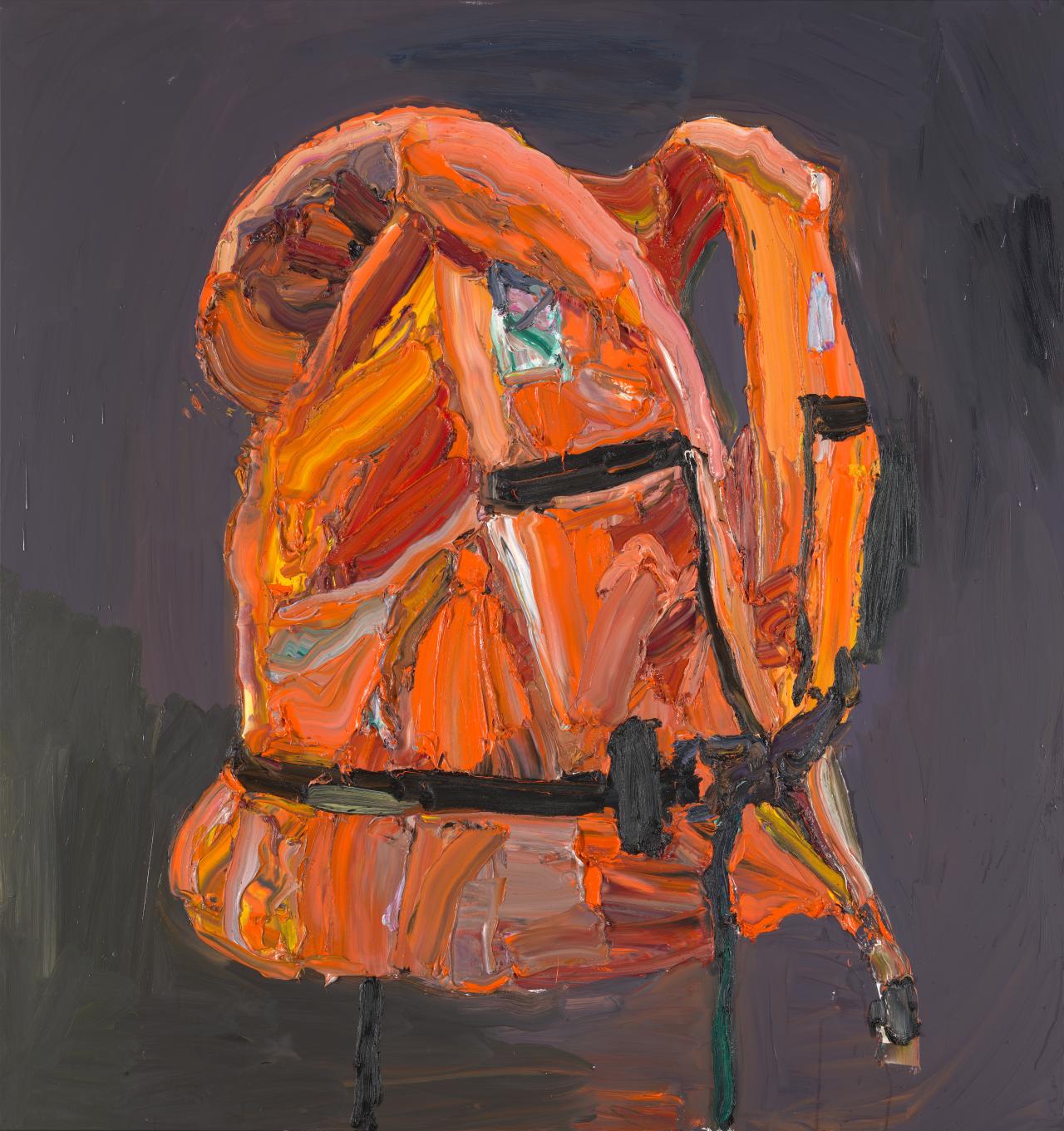
Ben Quilty, High tide mark 2016, oil on canvas, 170.5 x 160.4 cm, National Gallery of Victoria, Melbourne, © Courtesy of the artist and Tolarno Galleries. Ben Quilty’s paintings invite viewers to consider current social and political issues. The impasto-style painting High tide mark, 2016, was the result of the artist travelling that year to Greece, Serbia and Lebanon to witness firsthand the global refugee crisis. On a beach in Lesbos, Quilty observed a ‘high tide mark’ of bright orange life jackets, discarded by Syrian asylum seekers as they reached the shore after making the perilous journey across open ocean from Turkey. In Quilty’s words, the vest symbolises the ‘ocean of humans that have moved across those waters’, themselves dislocated and dispersed like the cast-off jackets.
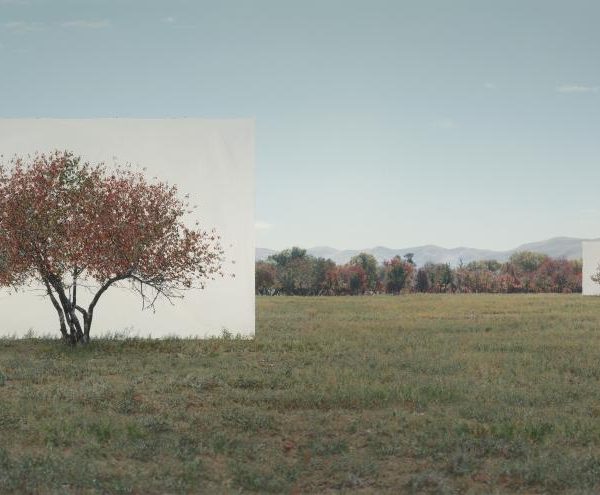
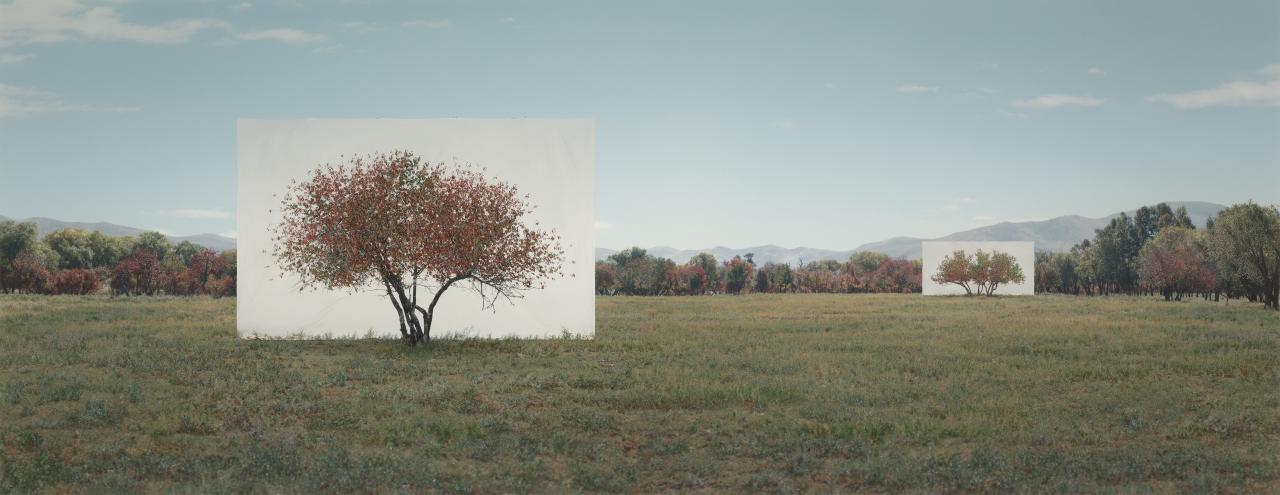
Myoung Ho Lee,Tree… #7 2014 from the Tree abroad series, archival inkjet print, 104.1 x 230.8 cm, ed. 1/6, National Gallery of Victoria, Melbourne, Suzanne Dawbarn Bequest, 2015, 2015.486, © Myoung Ho Lee, Courtesy Yossi Milo Gallery, New York. Myoung Ho Lee (Korean born 1975) began to photograph trees in 2004. He wanted to reposition them from environmental elements so common that we often do not notice them, and to celebrate unique beauty in the natural world. As he describes it: ‘It’s as if the tree unites all: the ground, the sky and man in between. In East Asian philosophy the universe breaks down into three parts: Chun-Ji-In. Chun means the sky, Ji means the ground, and In means human. Since a tree connects all three, I feel very much that a tree is like a universe’. The trees in the photographs on display have been isolated from their environment by artfully placed backdrops of pristine white canvas. Lee’s interventions into the landscape highlight the unique form of each of the trees; the limbs and foliage are shown in crisp detail, they appear to have been flattened out, reduced to elegant graphic elements floating in space. The setting in which each tree grows can be seen extending beyond Lee’s blank backdrops, each plant is shown paradoxically as both isolated from its context, and situated within its habitat.
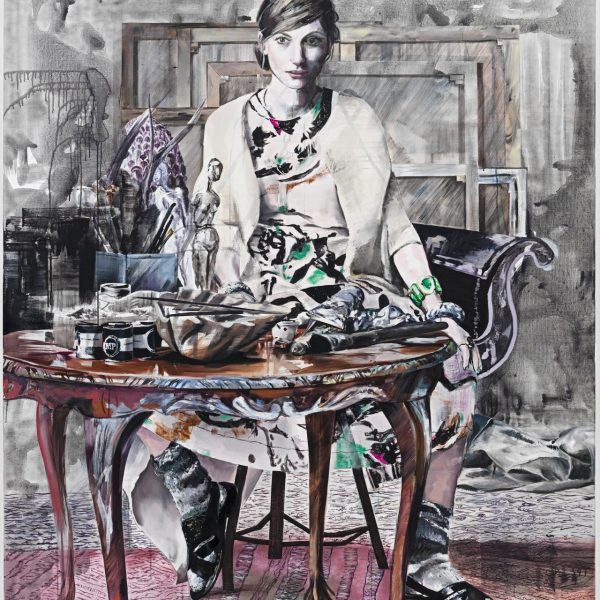
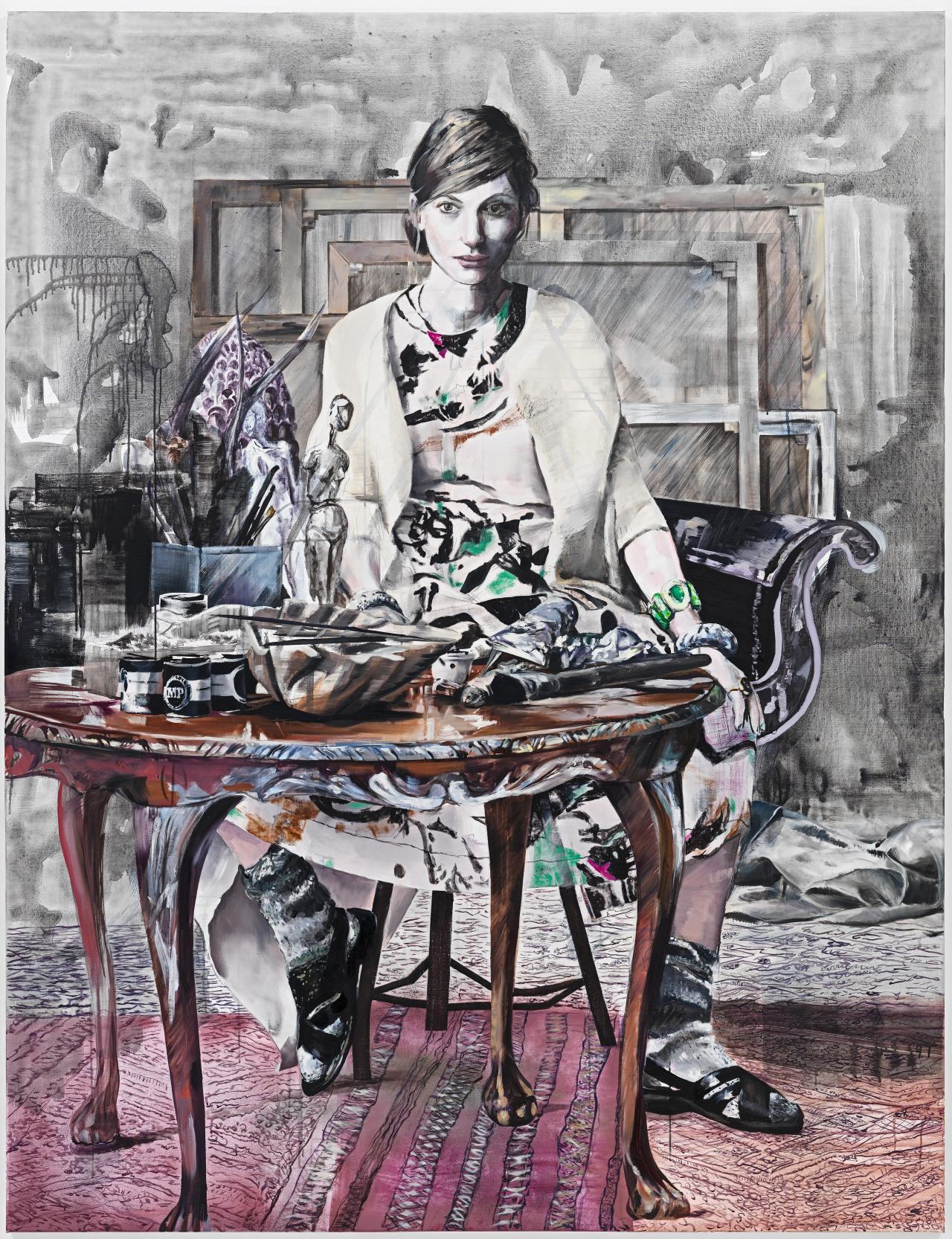
Paulina Ołowska,The painter 2016, National Gallery of Victoria, Melbourne, © Paulina Ołowska; Image courtesy Paulina Ołowska and Metro Pictures, New York, © Courtesy of the artist and Metro Pictures, New York. Paulina Ołowska’s (Poland born 1976) work is influenced by the history of avant-garde art, traditional crafts and experimental theatre traditions of Poland and other former Soviet countries. Using performance, sculpture, painting, neon and fashion, she revisits history, often shedding light on underappreciated female artists. Ołowska’s works combine portraits of women from gardening magazines with elements from Slavic mythology and folklore, as well as techniques from Les Nabis – artists who left Paris to live in the countryside in the 1890s. The paintings incorporate esoteric references to rural living and represent Ołowska’s ‘active muses’ – characters with specialised knowledge, including fungi and butterfly experts, gardeners and artists.
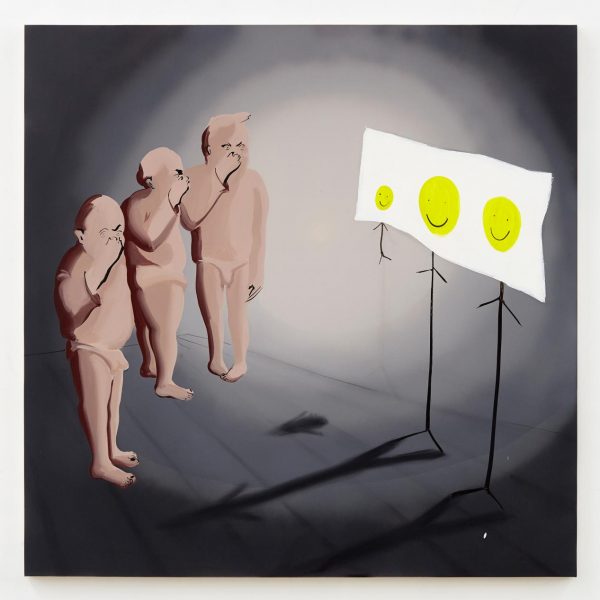
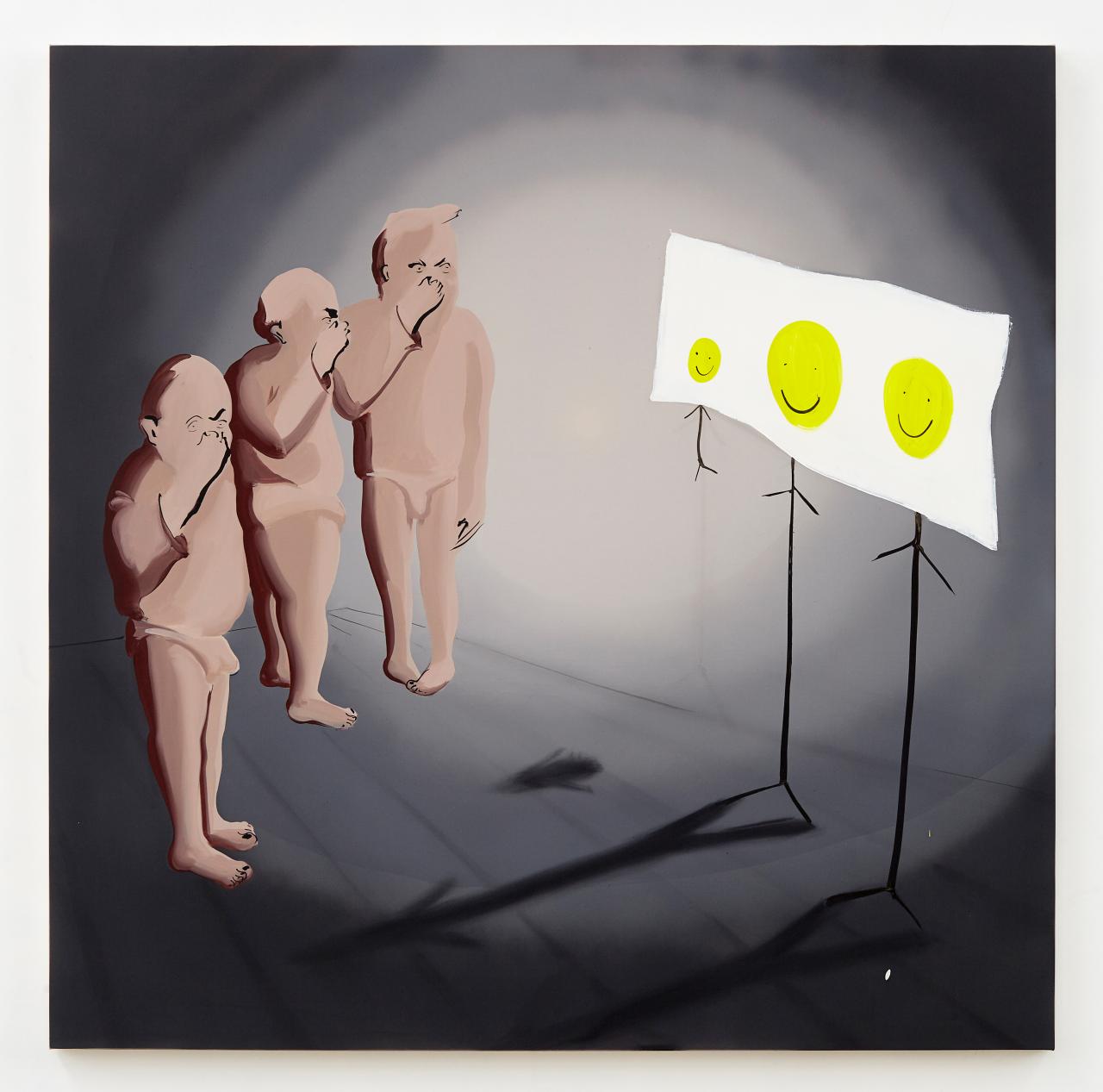
Tala Madani, Smiley has no nose, 2015, oil on linen, 60 x 60 x 1 5/8 inches, (152.4 x 152.4 x 4.1 cm)(Inv# TM 15.002), Courtesy of David Kordansky Gallery, Los Angeles, CA, Photography: Joshua White, © Courtesy of David Kordansky Gallery, Los Angeles. Rich in narrative and irony, Tala Madani’s (Iran born 1981, emigrated to United States 1994) work depicts darkly comic and often theatrical stories featuring bald, middle-aged men as the main protagonists. In each of the three paintings Primer, 2015, Smiley has no nose, 2015, and Lights in the living room, 2017, any supposed authority of the men is undermined in a critique of power relations, including that of male privilege. Madani upsets art-historical conventions, openly embracing caricature, gags and disarming visual simplicity. Her approach demonstrates a contemporary sense of sequencing, movement and speed influenced by cartoons, cinema, videos and television.
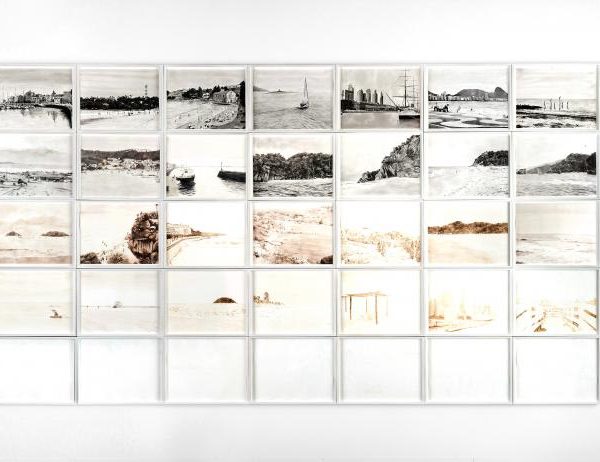
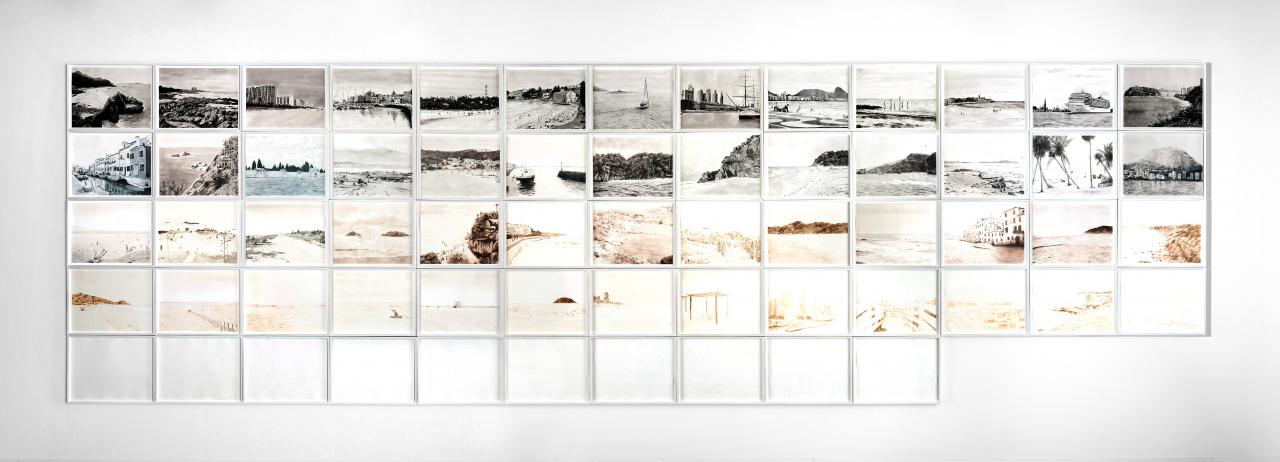
Jorge Méndez Blake Bartlebooth Monument 2011- 2015Ink, pencil, paper, 50 x 70cm each, 62 pieces, Courtesy the artist and Galeria OMR, ©Photoservice Art Basel 2015. Jorge Méndez Blake (Mexico born 1974) explores the connections between literature and fine arts in his installations and drawings. The neon work Complete poems, 2015, represents a collection of poetry, functioning both as a semiotic and material ‘sign’. As the artist explains: ‘I approach art as someone who is trying to write, but without writing. I make two- and three-dimensional objects that occupy the space between disciplines, where the margins of literature, art, and architecture overlap.’ His suite of drawings Bartlebooth monument, 2011–15, presents the conclusion to an unfinished fictional project described in the novel Life A User’s Manual (1978) by French writer Georges Perec. One of the protagonists is the millionaire Percival Bartlebooth, who embarks on a life-long project to produce 500 watercolours of ports and beaches during a twenty-year trip around the world. Once completed, Bartlebooth despatches each painting to a master craftsman in Paris to turn it into a jigsaw puzzle. After two decades Bartlebooth returns home and begins to assemble the jigsaws. Once completed, each work is sent back to the port where it was painted and soaked in a solution, whereupon the blank painting is returned to Bartlebooth, leaving no trace of his life’s work. Tragically, Bartlebooth dies while working on a jigsaw, having finished only 438 of the planned 500 puzzles. Méndez Blake’s piece presents the missing sixty-two drawings of ports and beaches, which are in the process of fading into nothingness.
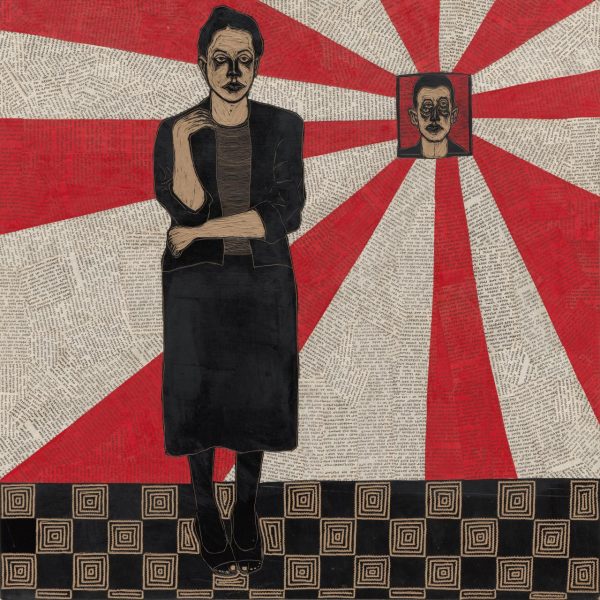
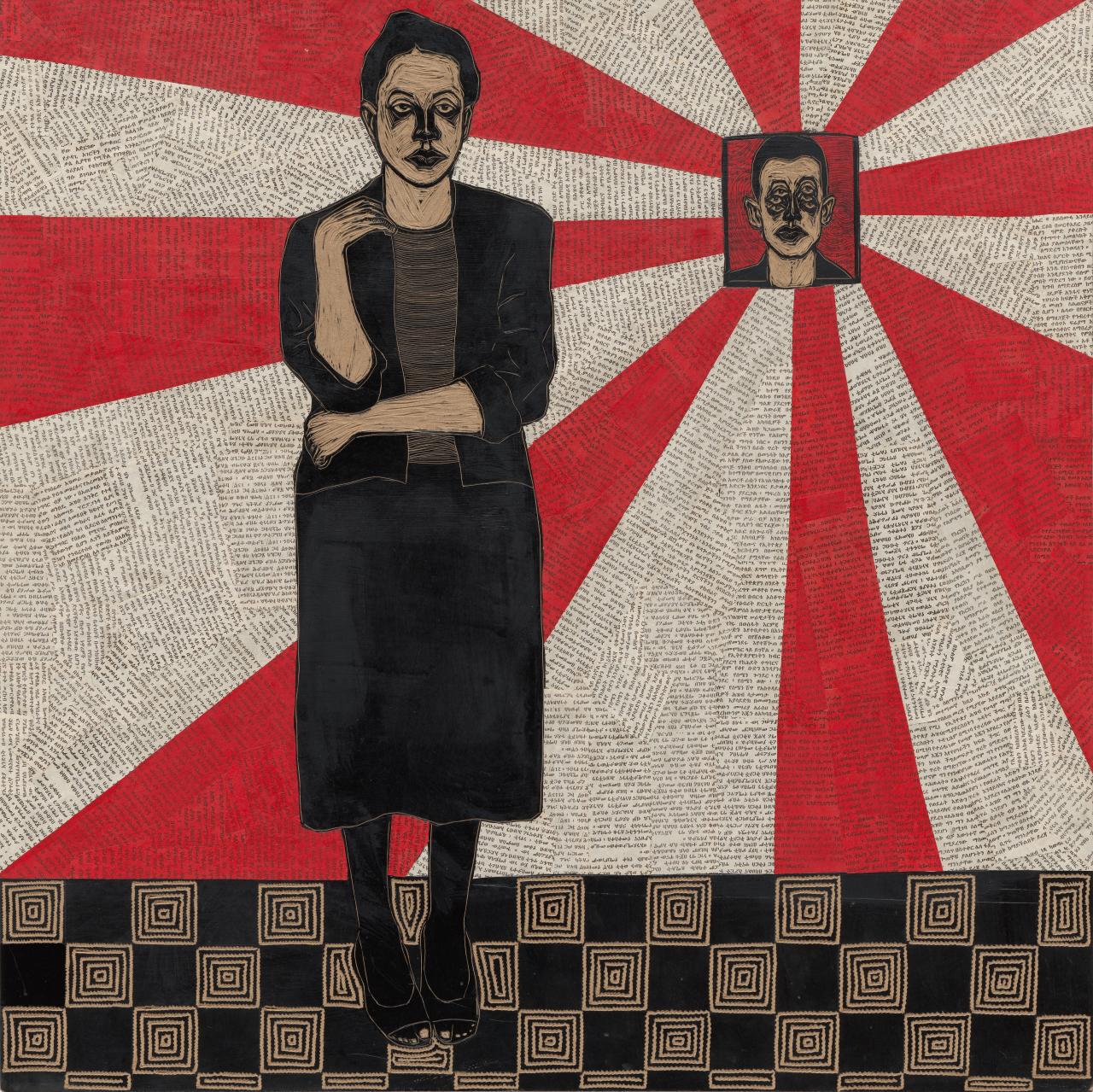
Ephrem Solomon, Untitled (LT001) 2016 from the Signature series 2016, synthetic polymer paint and black pencil on collage of cut printed paper on synthetic polymer paint on composition board, 84.8 x 85.1 cm, National Gallery of Victoria, Melbourne, © Ephrem Solomon Tegegn. The works from Ephrem Solomon’s (Ethiopia born 1983) Signature, 2016, series show the artist’s bold graphic style and unusual medium, which combines hand-carved wood panels, collaged printed text and hand-colouring. Solomon’s images are inspired by the residents of his hometown Addis Ababa, where a large part of the population lives in difficult circumstances, with very few social, political or economic opportunities. As Solomon states, ‘My works portrays the distance between what the governed people need and want, and what the response is from the governors. I have tried to picture, as precisely as possible, the actual and innocent feeling of the governors.
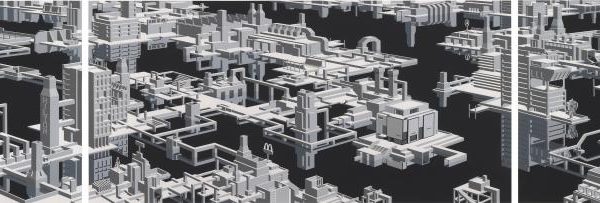
Richard Giblett, Sump system 2015-2016, gouache on three sheets, 111.5 x 221.5 cm (sheet) (each) 119.0 x 684.0 cm (framed triptych), National Gallery of Victoria, Melbourne, © Courtesy of the artist and Murray White Room. In the vast triptych Sump system, 2015–16, Richard Giblett (Hong Kong born 1966, emigrated to Australia 1973) depicts a complex network of tower blocks, chimneys, funnels and pipes, which is mirrored in a deep black sump that resembles a massive pool of black oil. This industrial landscape draws attention to the consumption of resources in today’s cities, and recognisable icons of corporations and international brands, including IBM, Hilton, IKEA and McDonald’s, can be identified within this labyrinthine structure. Giblett imagines a dystopian world of mass production – the ‘sump system’ that underpins our consumer habits, and yet remains largely invisible.





: Triennial until 15 April 2018…)