
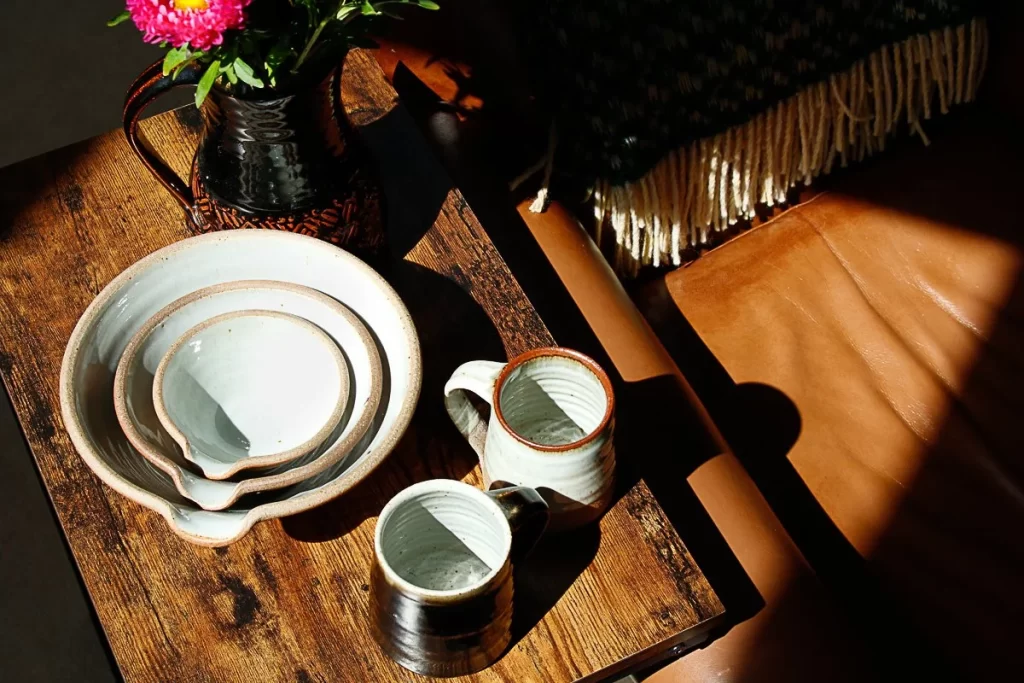
Not long ago I visited Leach Pottery in St Ives, Cornwall and wanted to bring this inspiring alchemic institution to everyone’s attention.
When I was at uni in Auckland one of my subjects included design; among other things we studied the Bauhaus, Adolf Loos, Clarice Cliff, Art Nouveau, and a particular stand out was the Art Nouveau work of glass maker and designer Émile Gallé (another post entirely), as well as many other exciting specialites, we also looked at avant garde potters and Bernard Leach was the first one mentioned.
I don’t remember much about that time but it, along with contiguous art history subjects, enforced a strong desire to visit St Ives; to be at the centre of the lingering atmosphere that makes up so much of English, Australian and New Zealand’s art history.
From the moment I arrived both the Tate and The Leach Pottery powerfully beckoned; I couldn’t wait to get there, located just on the outskirts of St Ives and it was a truly rewarding and eye opening in every sense.
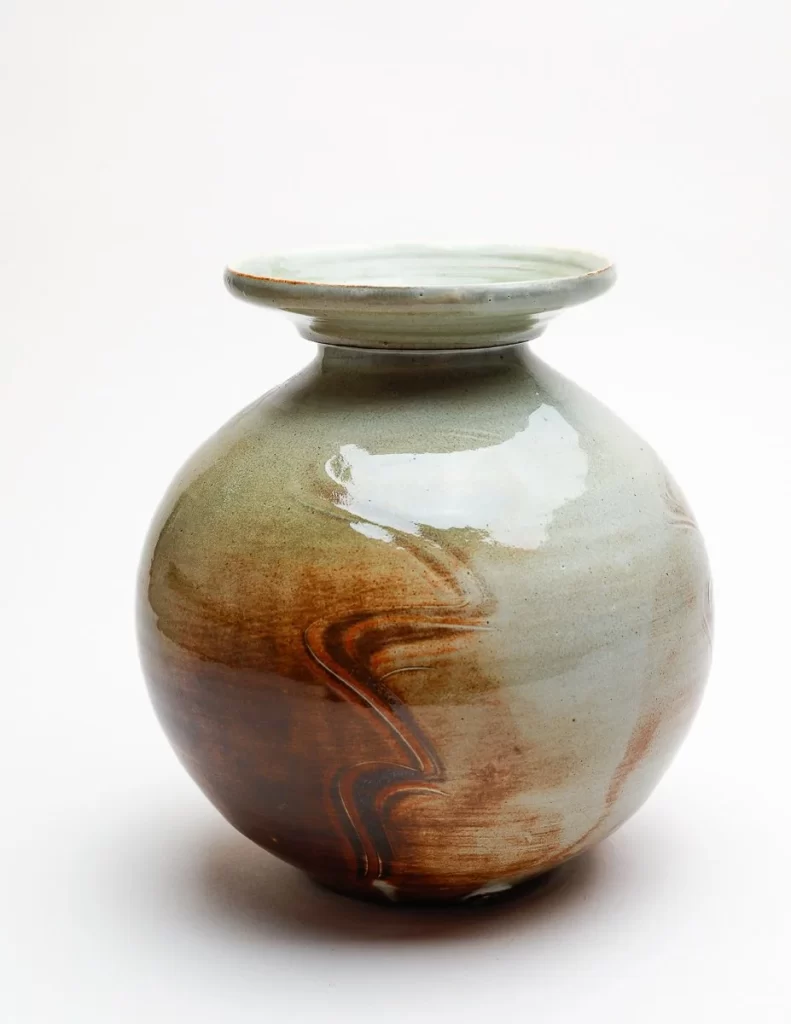
It was not only the feeling of being steeped in a unique history (that was evident everywhere you looked: old kilns, memorabilia, photography, little alcoves and dark little rooms), but additionally the quality of work on display in the shop was mind-blowing. It was exciting and enthralling meandering through room-after-room and witnessing the legacy of this rare history in the singular work quietly proclaiming authority on all aesthetic and technical fronts.
From the 19th century onwards, St Ives drew artist’s from around the world because of the soft intoxicating light of West Cornwall. Moreover, when the Great Western Railway extended to West Cornwall in 1877, access for those seeking community, creativity, and artistic endeavour increased exponentially making St Ives a mecca for artists.
_________________
Bernard Leach (1887, Hong Kong – 1979, St Ives) was at the vanguard of modern British potters and ceramicists – his influence was profound and to this day his impact can be observed in contemporary British pot making.
Having been born in Hong Kong, Leach was, by definition, steeped in the culture of South East Asia and the Orient in general – finally ending up in Japan in 1909 and staying until 1920. He then returned to Britain with Shōji Hamada, and together established the Leach Pottery on the outskirts of St Ives.
_________________
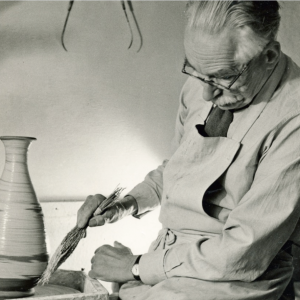
Bernard had agreed with his dying father that he would pursue banking, yet eventually journeyed from Japan, with Shōji Hamada, to establish a pottery and begin a new life as an artist-potter. Bernard sought to forge his own expression and existence.
Whilst pot making traditions in Japan have evolved over centuries, at that time in England hands-on holistic pot making institutions for individuals, with free expression (undictated intuitive experimentation and making), spiritual expression (a whole of body manifestation) and material observation, examination and methods, along with the free flow of ideas, were few and far between.
The Leach Pottery was a knowledge and experience based endeavour: you worked, experimented and built upon knowledge from both the past and the present – you learned as you went along.
It is clear that both Leach and Hamada were focused on what had not been done before either artfully, conceptually or practically. However, they were heavily in debt to the processes, mechanisms, experience and expression they had been both subjected to, and enveloped within, in their years spent together in Japan, and they intended to put it all on the table at the Leach Pottery.
_________________
The Leach tradition emphasises knowledge. Bernard Leach and Shōji Hamada were early studio pottery pioneers – aspiring artist-potters and, by some necessity, autodidacts – for where could one learn the potter’s processes to make something beyond the industrial or decorative?”
_________________
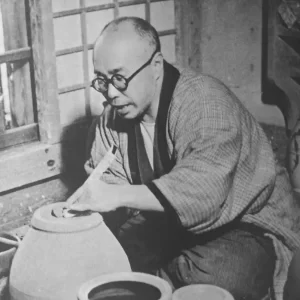
Shōji Hamada (Kawasaki 1894 – Mashiko 1978). Due to his contribution to the ceramics industry Hamada was proclaimed a ‘Living National Treasure’ by the Japanese government in 1955. Early in his career Hamada studied at the Tokyo Industrial College (now the Tokyo Institute of Technology) and also had affliations with the Kyōto Ceramic Testing Institute. In the 1920’s he accompanied Bernard Leach in the opening of Leach Pottery in St Ives; remaining there for three years he eventually left England and set up his own ceramics and pottery establishment in Mashiko Japan. However, Leach and Hamada continued their association throughout the following decades.
Hamada’s work is marked by a simple yet elegant economy of design that distinguished him as one of the world’s great potters. His works are displayed in various museums, including Tokyo’s Japan Folk Art Museum, where he held the post of curator for many years.
_________________
SOME POTTERS
_________________
ROELOF UYS
Roelof Uys is a lead potter at the Leach Pottery. He studied Fine Art at East London Technical College, South Africa and founded his first ceramics studio in Limpopo Province in 1992, where he collaborated with potter Solomon Matatoko. He went on to work in Knysna as a Resident Potter at Bitou Crafts, founded by Clementina van der Walt, before starting his own production pottery in Cape Town, where he also served on the Committee of the Western Cape Potters Association. After leaving South Africa in 1998, Roelof worked for David Small at Four Seasons Pottery in North London before moving to St Ives in autumn 1999 where he worked as a Studio Potter at the Goalyard Studios founded by Leach apprentice John Bedding.
As part of the Leach Pottery’s senior management team Roelof supervises the training of student apprentices, visiting interns and oversees the design and production of the current Leach Standard Ware.
“It was a great honour for me to be offered the role of Lead Potter here at the Leach and I hope to continue working in a tradition that has influenced and inspired so many artists from all over the world. I am always mindful that I stand on the shoulders of giants.”
AMANDA BRIER
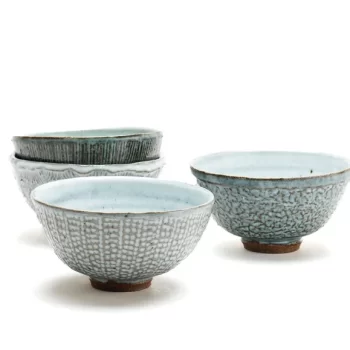
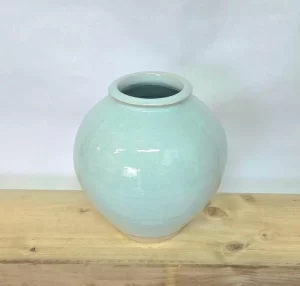
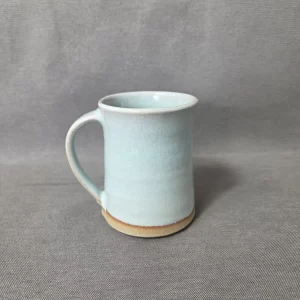
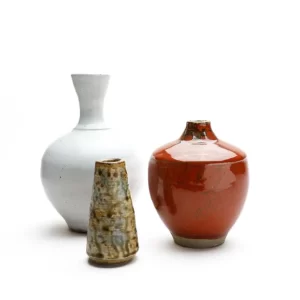
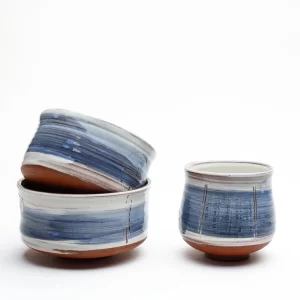
Making pots from her studio in Falmouth, Amanda uses local clay from St.Agnes in Cornwall; the pots are electric fired to a high temperature. Her current work is glazed with a subtle pale blue that is intended to represent the soothing tranquillity of Cornwall’s sea and sky.
The base of the pots are often left unglazed showing the colour of the natural clay, which has a toasted warmth and sand like quality.
Amanda worked at the Leach Pottery part time as a Learning and Participation Officer from 2008 until 2021. Since then she works on her own pots and teaches part time.
Amanda has exhibited work at many shows and galleries in the UK and joining exhibitions in the United States and Japan, and has also been a member of the Cornwall Crafts Association for 18 years.
_________________
Leach 100 Centenary Celebrations
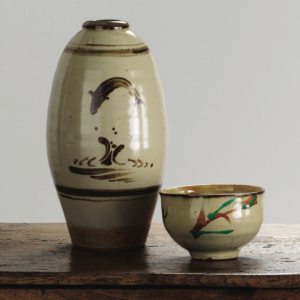
In 2020 the Leach Pottery begun celebrating 100 years. Established by friends and colleagues Bernard Leach and Shoji Hamada in 1920, the Pottery was built with an experimental and progressive spirit that has influenced studio pottery around the world.
Leach 100 celebrated clay and the legacy of the Leach Pottery with a multi-layered programme of community outreach, exhibitions, talks, artistic commissions, and conferences with projects (extended by Covid-19) continuing into 2023.
_________________
In the late 1950s, Janet Leach began shifting focus from tableware to the individual. With a vigorous aesthetic of her own, the Standard Ware forms became more robust, the apprenticeships ceased, and emphasis moved towards international students. After Bernard’s death in 1979, Standard Ware production stopped and, after Janet’s death in 1997, the pottery became the creative domain of Trevor Corser and Joanna Wason, later joined by Amanda Brier.
The future of the Leach Pottery
For over 100 years, the Leach Pottery has been a place where people come to learn, make, and share ideas—locally and globally. Founded by Bernard Leach and Shōji Hamada, who arrived in St Ives from Japan in 1920, their ideas continue to influence studio ceramics across the world. Today, the Leach Pottery celebrates creativity, craftsmanship, and connection through clay.
We’re now redeveloping the site to support the next century of making. This project will create dedicated spaces for learning, production, and community, designed to recognise our heritage while opening up new possibilities for everyone who works with or visits the Pottery.
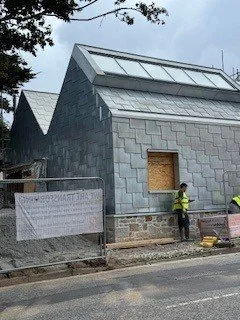
This work is supported by the St Ives Town Deal, the National Lottery Heritage Fund, Arts Council England, Wolfson Foundation and the Headley Trust.
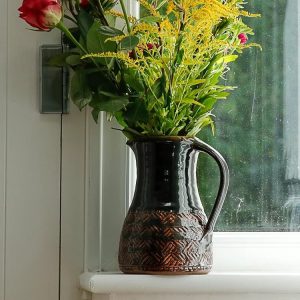
Leach Standard Ware
_________________
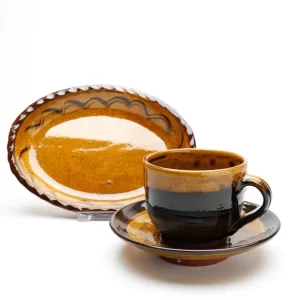
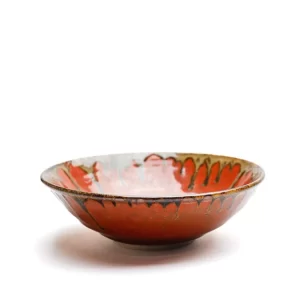
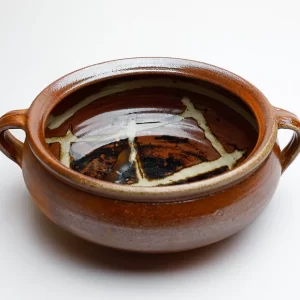
INDIVIDUAL POTTERS
___________
_________________
INFLUENTIAL PROCESSES
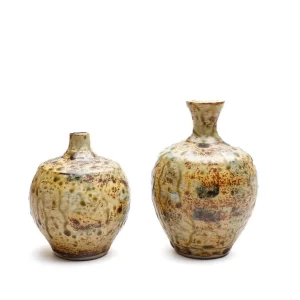
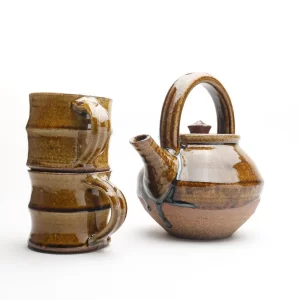
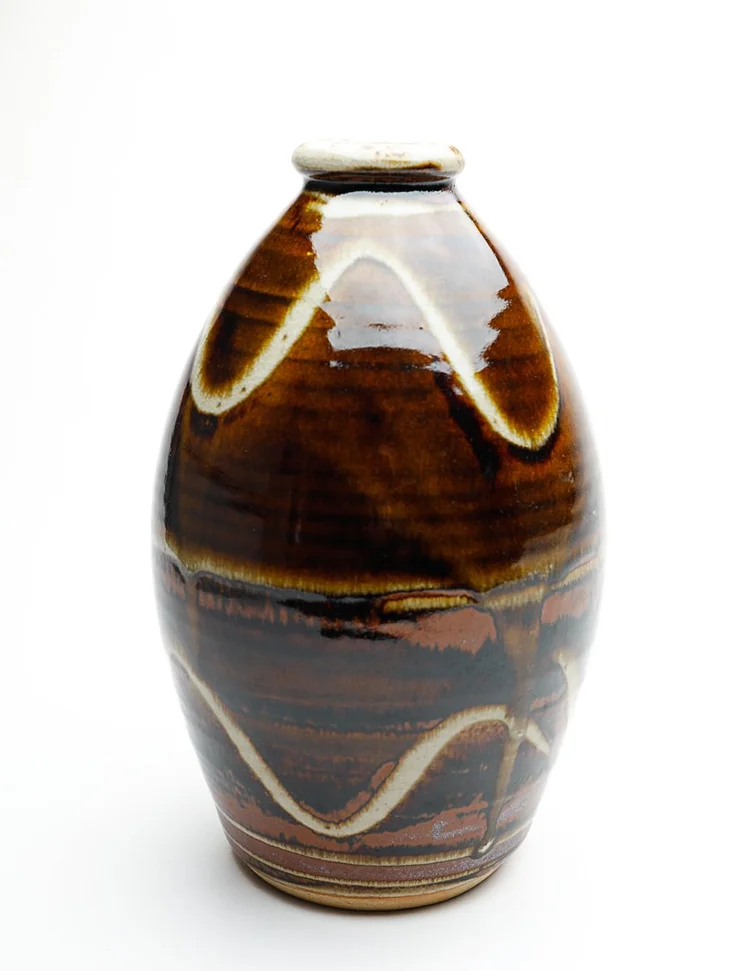
Leach Standard Ware: Leach Pottery is among the most respected and influential studio potteries in the world. We continue Bernard’s legacy by making handcrafted Leach Standard Ware and individual pieces, whilst training the next generation of potters. Today, under current Lead Potter Roelof Uys, the Leach Studio has returned to offering apprenticeships and producing reduction fired Standard Ware.
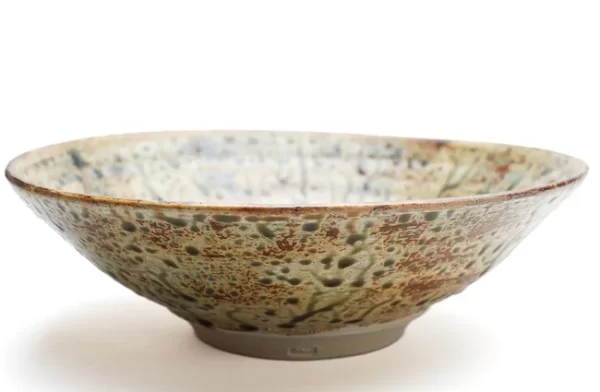
Raku Ware: Japanese hand-molded lead-glazed earthenware originally invented in 16th-century Kyoto by the potter Chōjirō, who was commissioned by Zen tea master Rikyū to design wares expressly for the tea ceremony. Quite distinct from wares that preceded it, raku represents an attempt to arrive at a new kind of beauty by deliberate repudiation of existing forms. The shape of the vessels is extremely simple: a wide, straight-sided bowl set on a narrow base. Because raku wares are molded entirely by hand rather than thrown on a wheel, each piece clearly expresses the individuality of the maker’s hand, and pieces tend to be unique creations. The glaze colours include dark brown, light orange-red, straw colour, green, and cream. Text Encyclopaedia Britannica
Mingei: During his first trip to Korea in 1916, Soetsu Yanagi collected pottery items manufactured by local craftsmen. In 1924, he established the Korean Folk Craft Museum in Seoul. Understanding that the Korean wares he gathered had been made by unknown craftsmen, Yanagi became interested in Japan’s own cultural heritage and started collecting craft items made by nameless Japanese artisans: lacquer ware, pottery, textiles, and woodwork. In 1925, Soetsu Yanagi, with his friends Shoji Hamada and Kanjiro Kawai, coined the term Mingei to describe this new intellectual and aesthetical movement. Formed from minshu (民衆common people) and kogei (工芸craft), Yanagi translated its meaning in English into “folk crafts”. Today, under current Lead Potter Roelof Uys, the Leach Studio has returned to offering apprenticeships and producing reduction fired Standard Ware. Text from Japan Objects
INDIVIDUAL POTTERS
___________
INDIVIDUAL POTTERS
___________
_________________
St Ives was a dream come true for me, because everything I love and am motivated by can be discovered there.
Art in myriad forms is not only significant for St Ives (the Tate St Ives testimony to that), but also architectural history in the many ancient intact buildings, and the lives of the people who built them. Additionally cobbled lanes, granite sidewalks, stone walls and houses, and undoubtedly, much of its eccentricity due to the lack of regulations at the time they were built and what materials were both available to use and long lasting. Boutique galleries and cafes; old pubs and fine dining abound. Alongside is the strong link to the ocean and the way that impacts St Ives culture architecture and art. An unimaginable joy to take it all in.
Today, Cornwall continues to be a thriving center for ceramic arts, with numerous studios and workshops carrying on the ancient traditions while pushing the boundaries of contemporary pottery.
_________________
LINKS
The Leach Pottery / @theleachpottery
St Ives Arts Club / @stivesartsclub
St Ives Society of Artists / @stivessocietyofartists
Tate St Ives / @tatestives
Ceramic Review / @ceramicreview


