
__________________
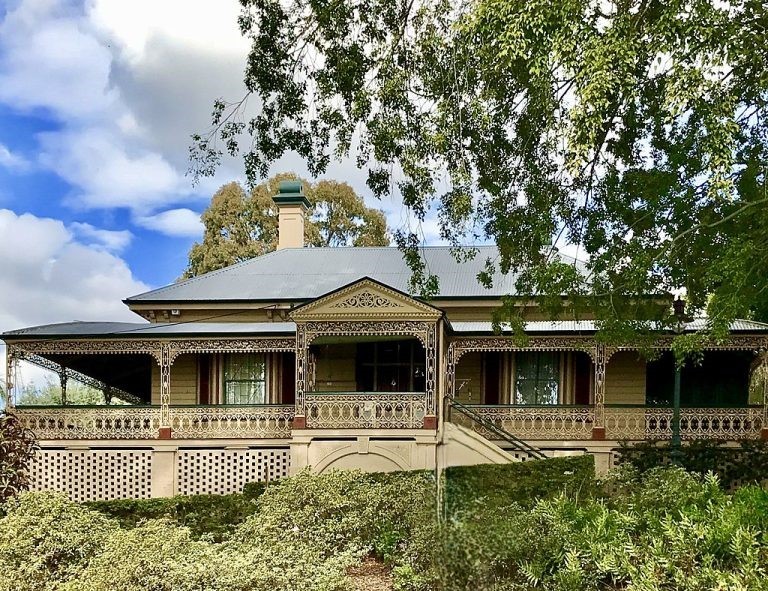
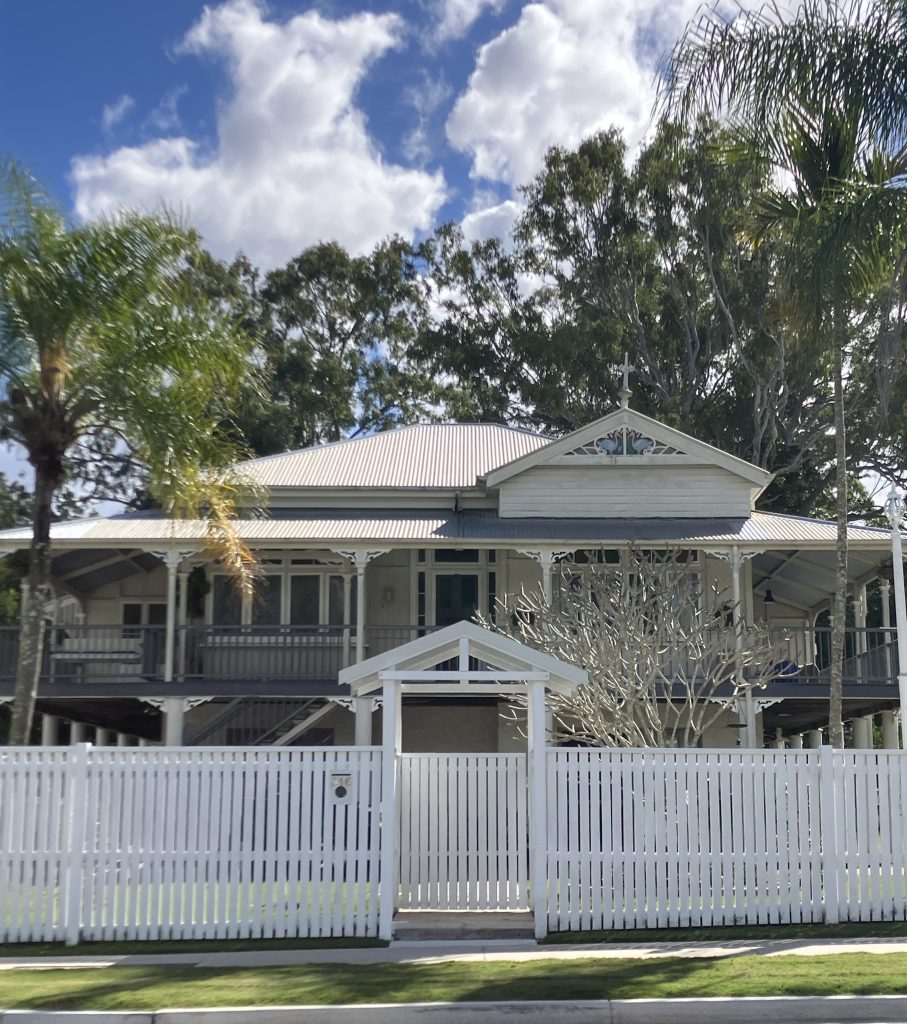
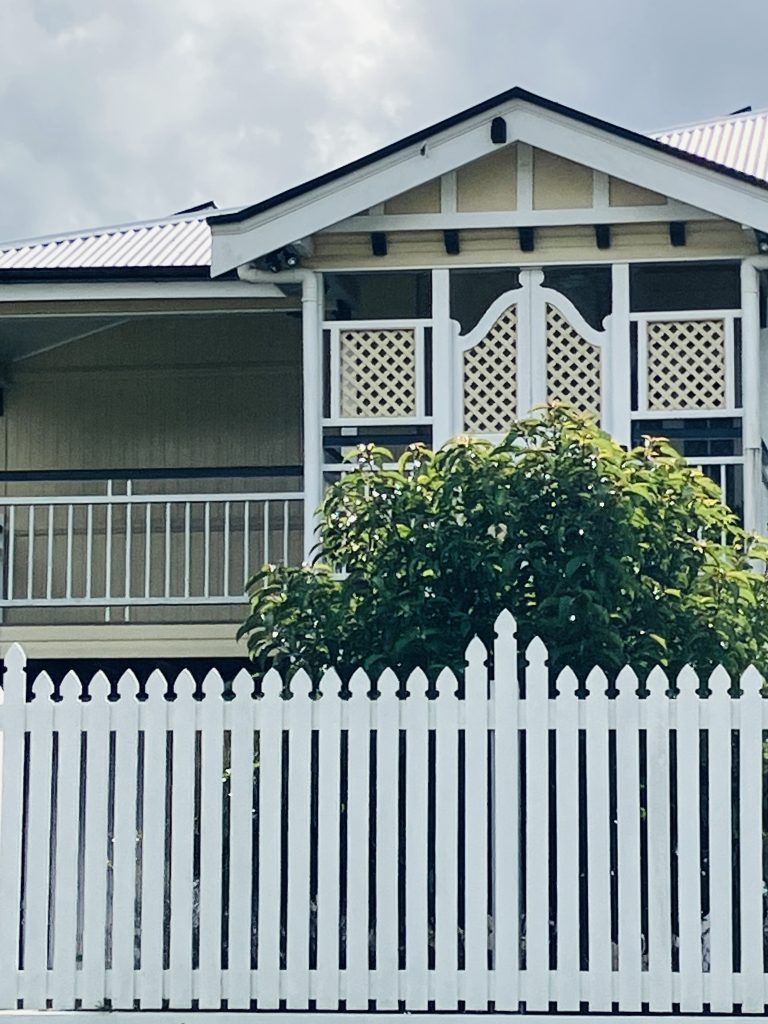
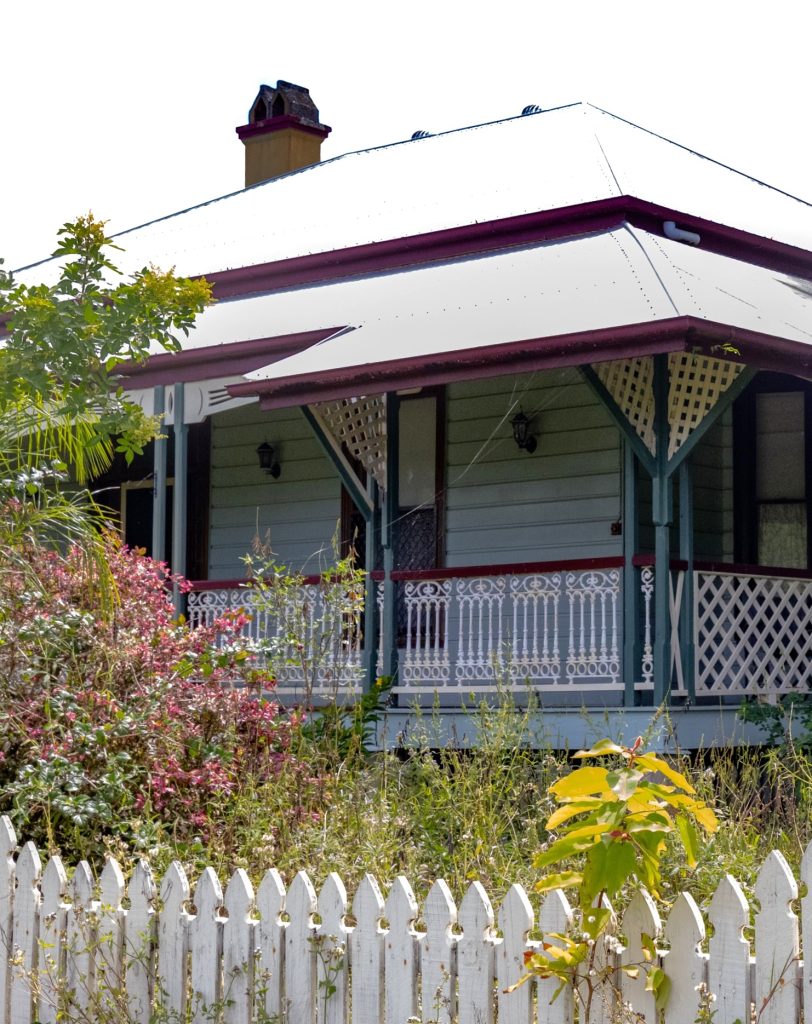
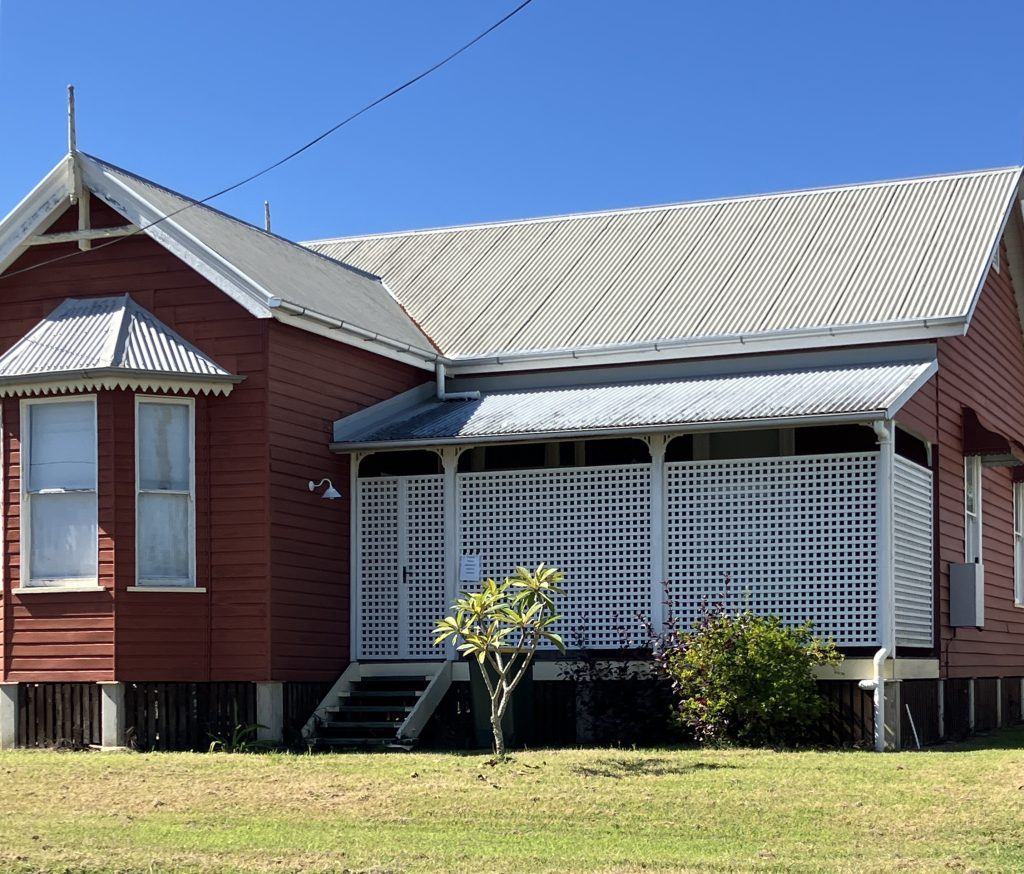
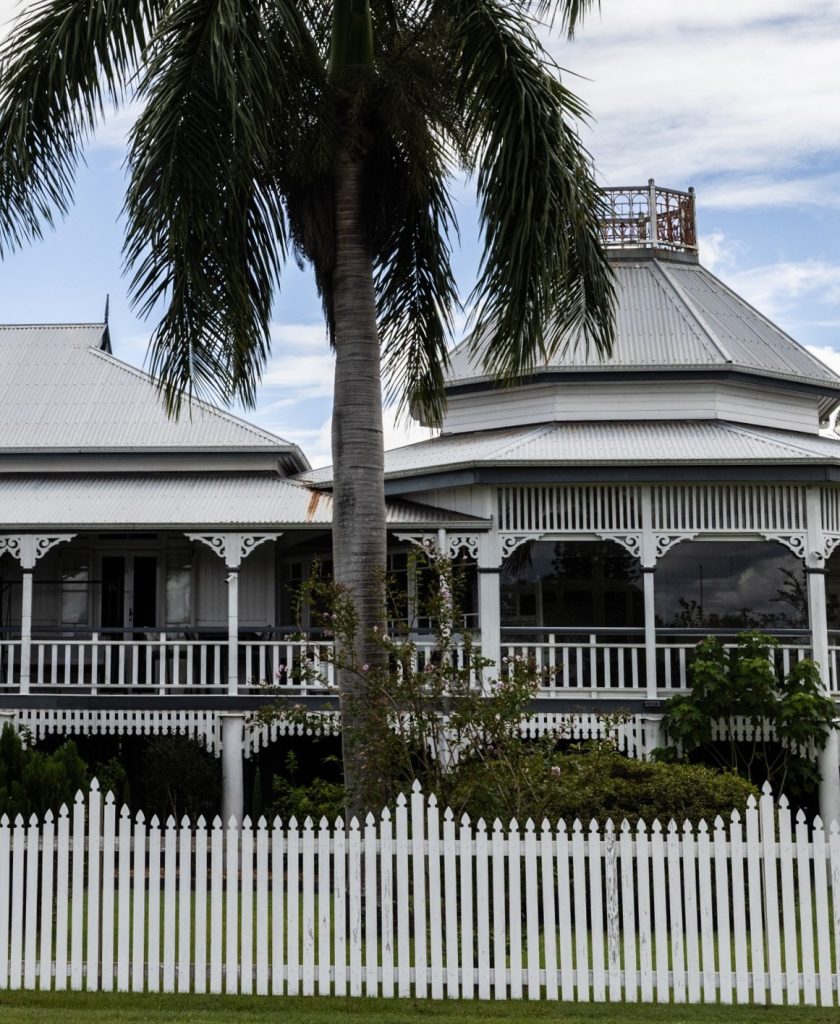
Brought up in west Queensland and schooled in Brisbane, I have long held a deep seated love of Queensland’s vernacular homes. Queenslanders are essentially generic: weatherboard, verandas on at least two sides (up to four), hallway front to back, raised on stilts with a steep corrugated iron roof. Moreover, the form, materials and individual preferences enable infinite variety.
_________________
The most salient and beautiful of the species are grand, authoritative, singular and timeless. In my liberal eclectic bio, a claim exists that I could drive around Brisbane all day looking at them and never tire of it: definitely true. The unique nature of the best and even the most prosaic means they are not only captivating but highly valued and sort after, with many undergoing renovation, conservation and restoration.
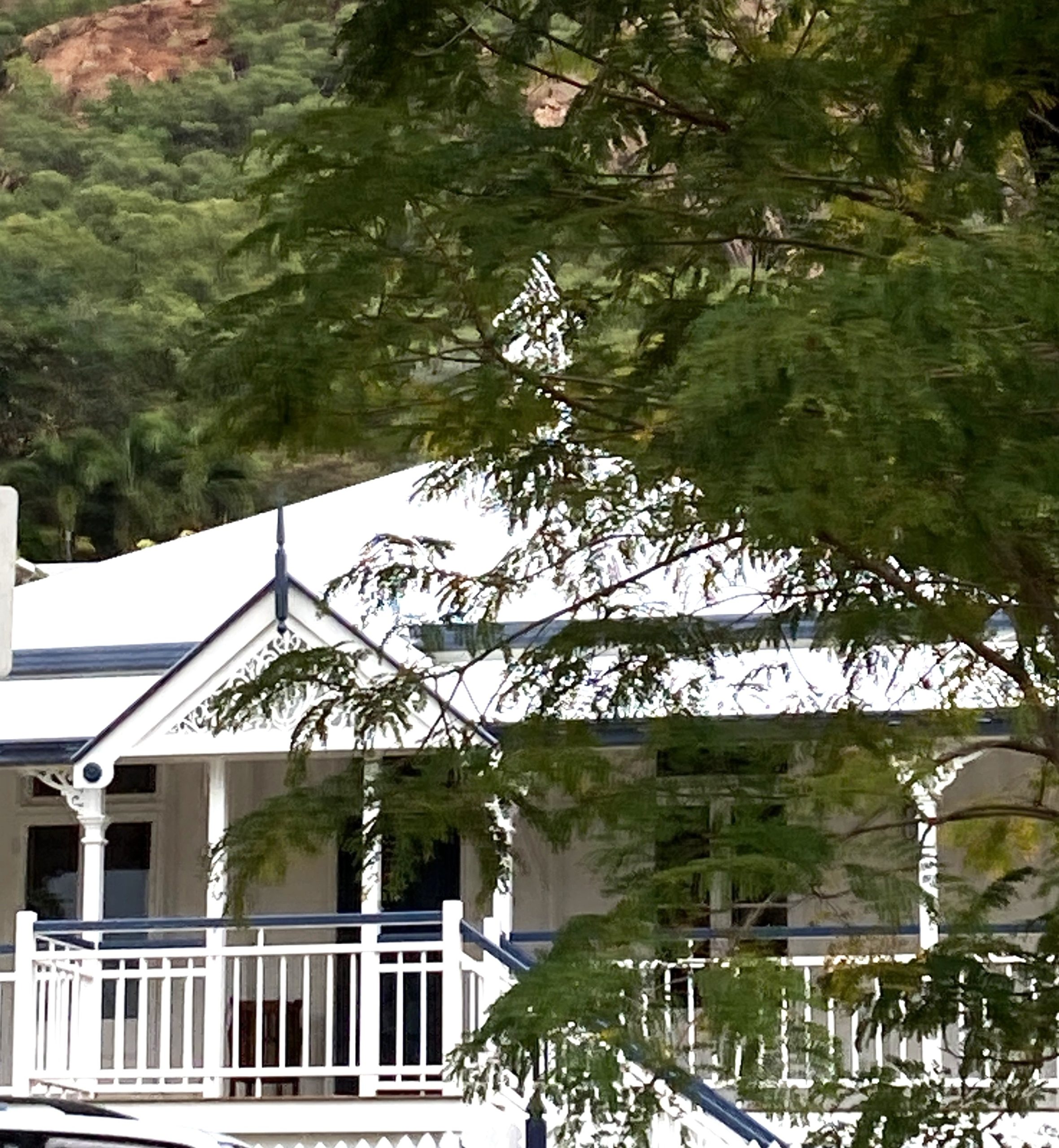 The Queenslander is self-evidently synonymous with Queensland – and instantly reognisable as such. The finest (like inner Sydney’s Spanish Mission’s, and the imposing double width, double story (sometimes triple story) terraces in inner Melbourne) command attention and high prices. They snapshot the history of residential architecture in Queensland: additionally, they typify the Queensland spirit as resourceful, creative and practical. We are proud of these customised Queenslander’s in the way we are proud of the predominance of the many international sporting stars that herald from Queensland.
In various ways the Queenslander led the way in residential architecture – especially as we know it today. Necessity is the mother of invention and adaptability, as a result homeowners dismantled exclusive indoor living on the back of uniquely accommodating the hot Queensland climate. This meant that the veranda was not only essential to escape both heat and downpours, but was integral to the first impression apprehended by visitors as a versatile, and in the best of them, an elegant cool entertaining space.
Flexible and functional the Queenslander adjusted in multiple ways, at the same time remaining stylish, interesting and personal. The positive attributes of the design know no bounds – still true in the 21st century.
__________________
__________________
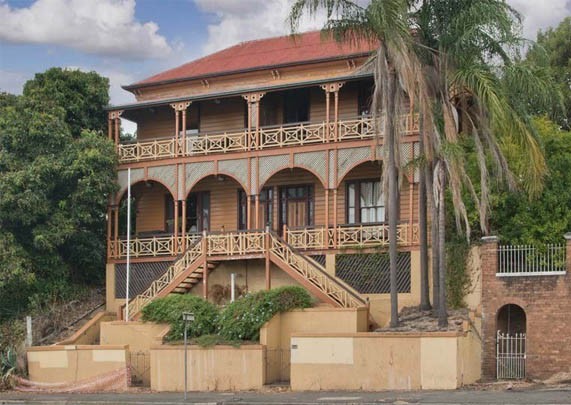
While Warriston House is not a Queenslander in the true single fronted sense, it was originally designed as two semi-detached houses with a common roof. Moreover, it does exhibit qualities that embody the most impressive Queenslanders of the late 19th century. Borrowing from European and British Colonial (Asia: India and South-East Asia) architectural precedents, such as the arch, the veranda including complex ornamental fretwork and veranda brackets, as well as a timber carcass.
The British famously co-opted the idea of a deep outside covered porch from India, turning the Hindi word varanda into the Anglicised verandah.
Warriston was built in inner Brisbane’s Red Hill in 1886 by David Pringle Milne, a Brisbane Alderman and former owner of the Glasgow Boot & Shoe Mart in Queen Street. Warriston has travelled through to the present day in various guises: a school, boarding house, offices and other iterations. Importantly, in 1980 it was carefully restored using the original paint colours.
The property is state heritage listed and remains one of Brisbane’s few surviving 19th century semi-detached homes. Its timber construction makes it an even rarer example.
__________________
__________________
Climate change means temperatures in Queensland and Australia are generally on the rise.
Australia, on average, has warmed by 1.51 ± 0.23 °C since national records began in 1910, with most warming occurring since 1950. Every decade since 1950 has been warmer than preceding decades. The warming in Australia is consistent with global trends, with the degree of warming similar to the overall average across the world’s land areas.
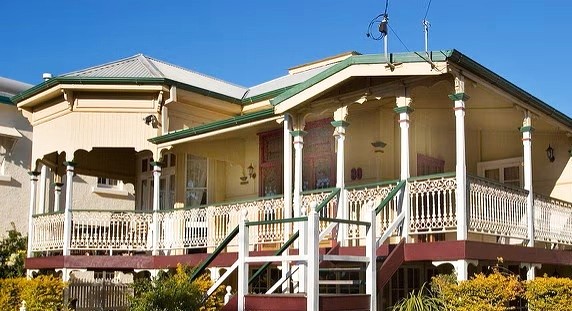
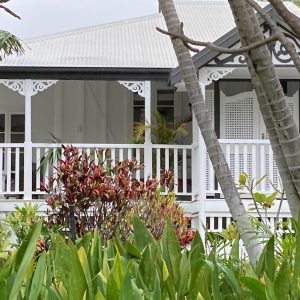 The Queenslander remains flexible to bespoke renovation to suit the kind of issues (both social and climatic) Queenslander’s face in the 21st century, whilst still maintaining their identifying attributes.
Queenslander homes in Brisbane and the Darling Downs region can be traced back to around 1840, and are believed to have been designed for British and European migrants, from wealthy families to fruit pickers who were not used to Queensland’s subtropical climate.
Though Queensland has a high concentration of old homes; arguably the Queenslander comes out on top as an instantly recognisable aspect of ‘Australian’ architecture and history, unlike its brick and stone counterparts in Sydney, Melbourne, Hobart and Adelaide. Historically Queenslander’s were easy to build because of an abundance of timber. Hand-in-hand with the spread of Queenslander’s in the relatively new colony was the establishment of sawmilling in Queensland in the 1850’s.
__________________
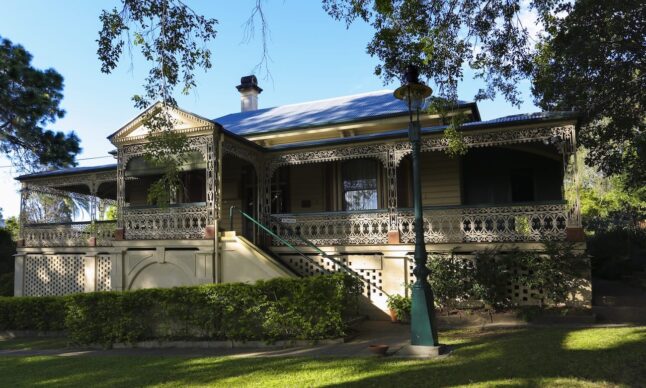
In 1857, local Brisbane businessman George Raff was granted 4 acres in Bowen Hills. Later, in the 1860’s brothers from Sydney; William, George and Frederick Perry, arrived in Brisbane and established an ironmongering business in Queen Street which flourished on the back of an influx of free settlers and the consequential prosperity in the state that lasted from 1860 to the 1890’s.
The profits from Messrs Perry Brothers Limited enabled William to purchase 2 acres from Raff on the hill in Bowen Hills in 1871; he built an extensive home there called Folkestone. Later in 1885, he began work on a house for William Herbert Perry his son and his new wife Leila that was to become Miegunyah House (Miegunyah thought to be an Aboriginal /English word meaning ‘my home’).
Across the decades Miegunyah changed hands and finally in 1978 it was listed on the Register of the National Estate. In 1979, the QWHA received a grant through the National Estate Program for heritage architects Richard Allom to propose a conservation plan. Since that time, the QWHA has restored Miegunyah to its 1880s appearance as much as possible. In 1992, when heritage legislation was introduced in Queensland, Miegunyah was listed on the state register. It is classified ‘A’ by the National Trust and its grounds are protected by a Brisbane City Council Vegetation Preservation Order.
Interestingly, in 1926 the Menzie family, having taken on the house following the deaths of Herbert and Leila Perry, had the home connected to sewrege and added a bathroom and toilet.
The Queenslander’s most salient features
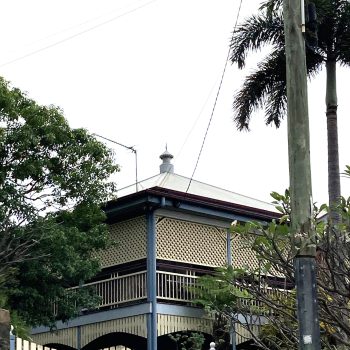 Corrugated iron roof: corrugated iron was cheap, light and easy to transport. Moreover, it is easy to replace if damaged or blown off.
- The steep roof meant both keeping heat at bay, and allowing water to run off quickly into a tank resevoir.
- The home is on stilts or stumps (metal capped to prevent termites), at the same time enabling ventilation under the house to dispel heat, and to provide relief from flooding.
- The Queenslander has wide veranda’s (always two, yet often three or four) to shelter the interiors from the harsh sun and heavy rain.
- Single-skin cladding for partitions and sometimes external walls: the light timber frame meant heat was not retained.
- Ornamental features, inside and out, to screen sun and ventilate the interior, such as fan lights and ceiling roses.
- In earlier times, Queenslander’s normally had large gardens, trees and fruit trees – trees also form a significant shield to heat entering the home. The large site means adaptability for the contemporary family.
- Customarily, the underneath of the house is concreted with the laundry in situ. The fact that the house is on stilts means that children can play in a large area out of the sun and rain, washing can be dried when raining and all manner of things can be stored ‘under the house’, including the car if need be.
- Being on stumps means the Queenslander is adaptable to difficult sites , and also to re-orientation and renovation; for example it is easy to build in part of a veranda if required. And plumbing is easily re-configured or attended to.
- The drawing room and dining room contained more decorative features while the kitchen and bathroom were routinely utilitarian.
__________________
The Romance
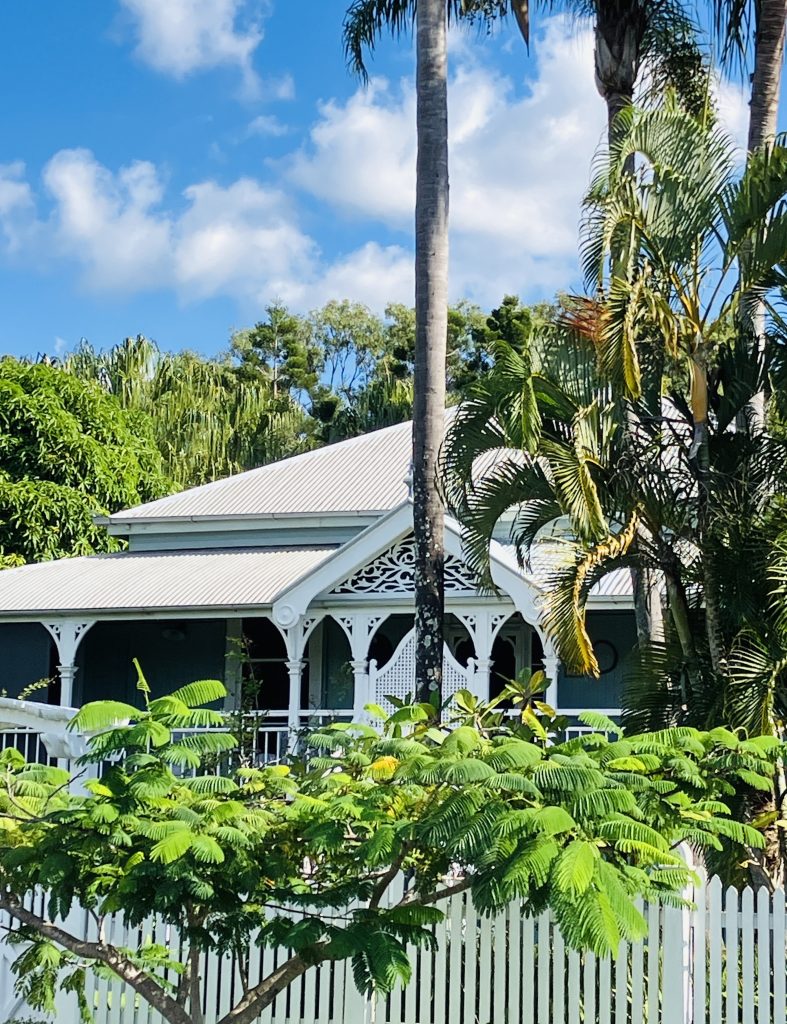
The traditional Queenslander is like a love letter from the past: individual(s) made unique decisions as one-off interpretations of themselves, their circumstances and the environment. They live on as stunning examples of that person’s exclusive vision. Moreover, they look and feel resolved; their authority immediate and the symmetry obvious – they exhibit tempered ostentation as if proud of their tropical paradigm; in their element among palm trees, frangipani, grevillea or gum trees.
The Queenslander’s singular “…qualities have also given these houses a peculiarly Australian form of vernacular character not found elsewhere in the world. The “Queenslander” is an important part of Australia’s cultural heritage”
__________________
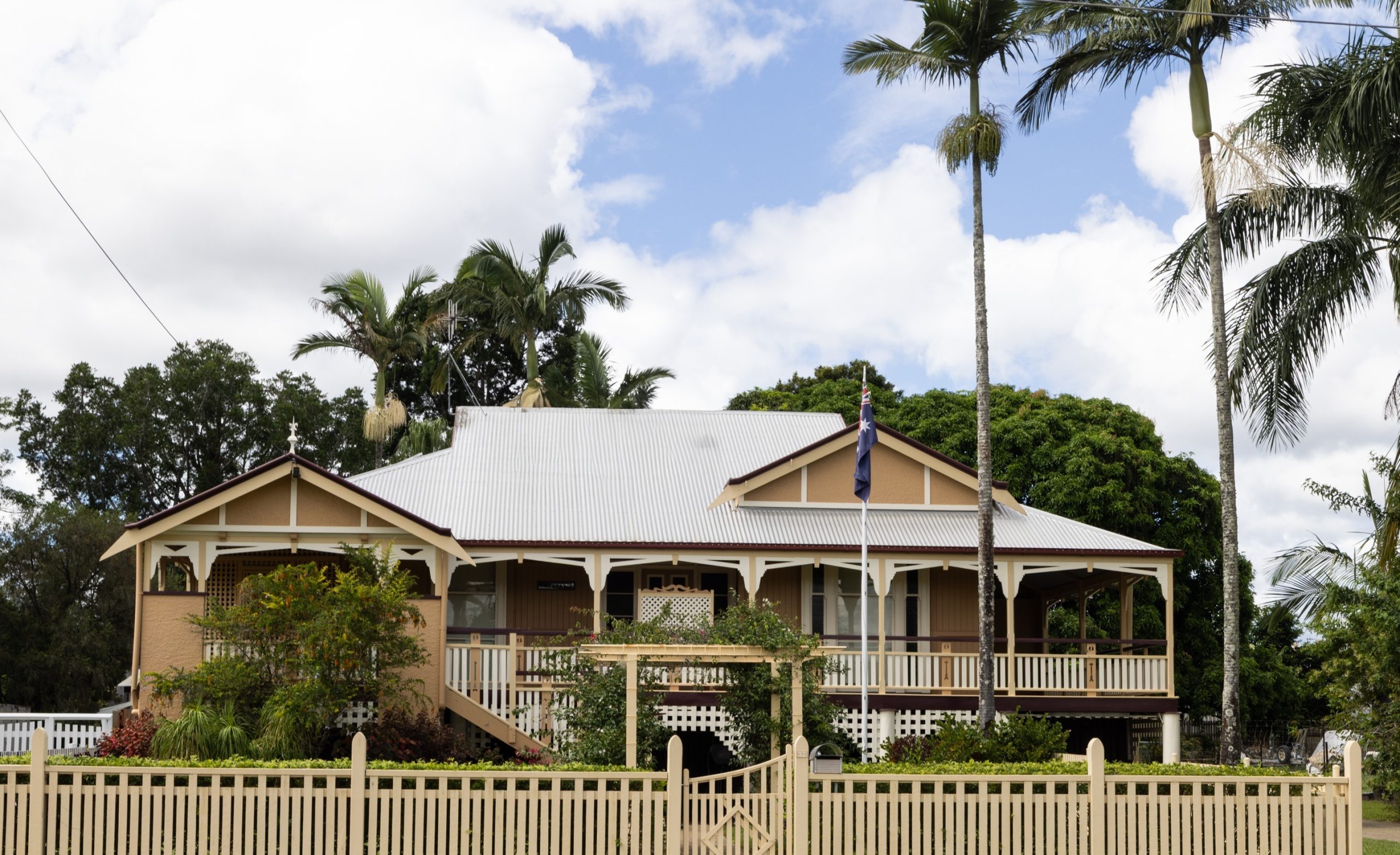 For one with a highly romantic disposition, the details of these homes completely invigorate and energise me – positively bespoke and exquisite in every way!
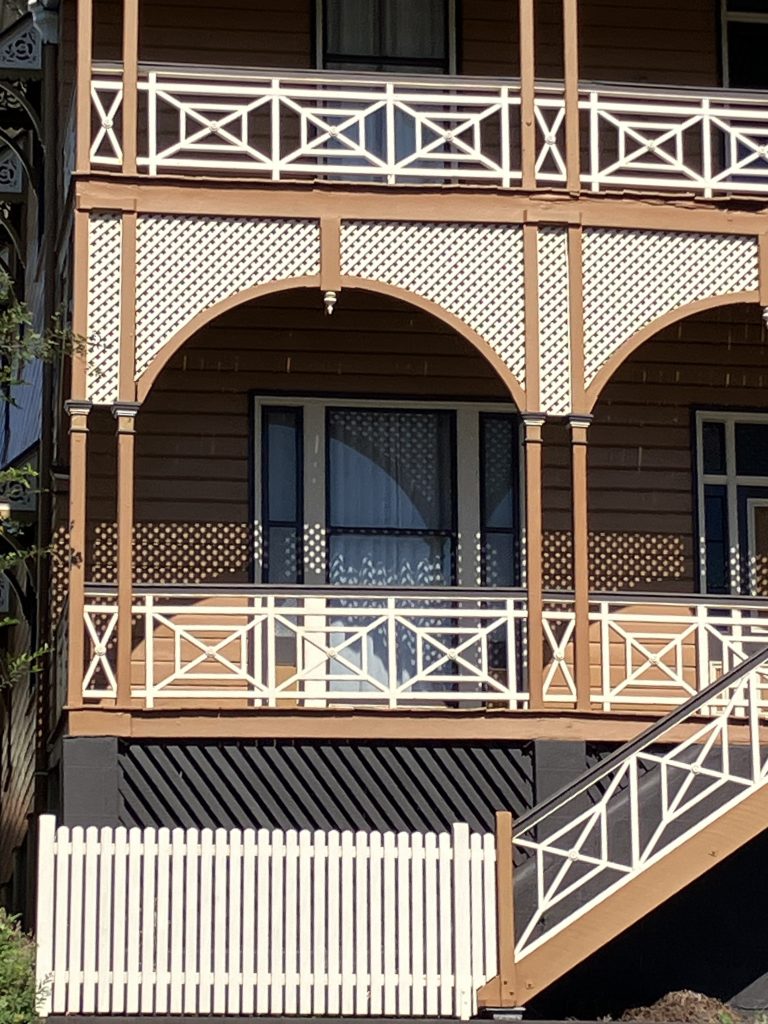
The influences of British Colonial residential architecture (both Indian and Oriental) have made a lasting impact on the Queenslander. The truly majestic demand scrutiny because they project their style with unrelenting confidence, charisma and charm on the back of both a one-off design aligned to a plethora of skilled craftsmen.
Consider the breadth of decision making that went into the most pre-eminent – the owners alongside the architect, builders (carpenters, joiners), plumbers, tinsmiths, sawyers, bricklayers, masons.
From the stand-alone design through to the trades working on site contribute to the overall romance of a complex object for living.
__________________
__________________
__________________
AN EVENT NOT TO BE MISSED: BRISBANE OPEN HOUSE (BOH)
PUT IT IN YOUR CALENDAR
BRISBANE 19TH and 20TH JULY, 2025
___________
___________
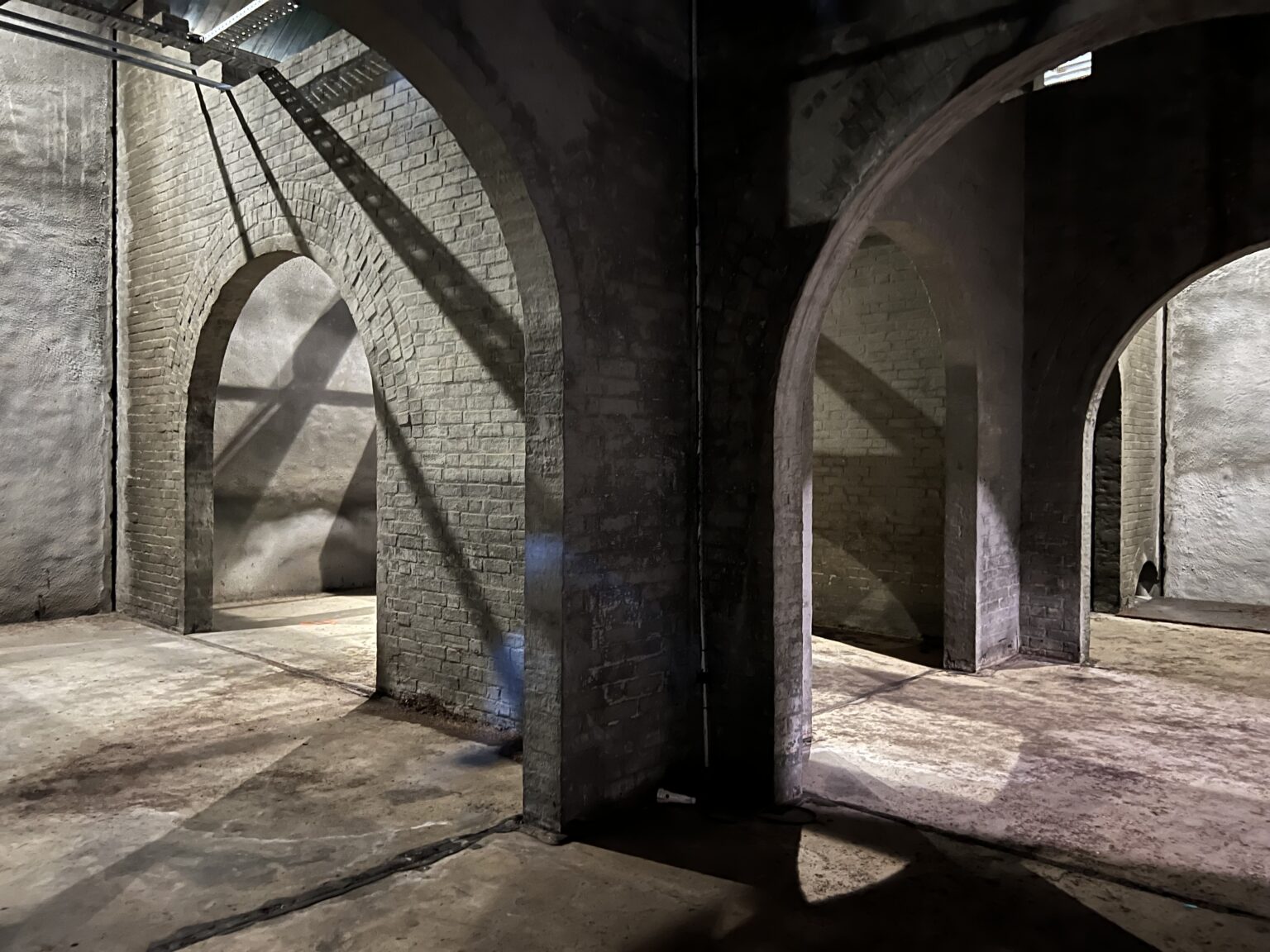
Selected buildings are open to the public with guided and self-guided tours encouraging visitors to explore, re-examine and engage with Brisbane’s built environment.
BRISBANE OPEN HOUSE (BOH)
The experience opens people’s eyes and minds to good design and curious spaces.
Brisbane Open House (BOH) is a free annual event providing residents and visitors with the rare opportunity to discover the hidden wealth of architecture, engineering and history in buildings and places around Brisbane city.
The inaugural Brisbane Open House was launched in 2010 with great success, attracting more than 12, 500 visits. Each year, the event has continued to grow and in 2019, our tenth anniversary, BOH attracted 80,000 visits from over 35, participants across 119 sites.
Text: Brisbane Open House (BOH) website
__________________
Featured image: Miegunyah House, c1886, Bowen Hills, Brisbane
__________________


