I fell in love with Canberra the moment I drove onto Commonwealth Ave over Lake Burley Griffin to Tourist Drive 5 and realised I had arrived at the convergence of my major preoccupations.
The dominant institutions surrounding Canberra’s Parliamentary buildings including the NGA (National Gallery of Australia), High Court of Australia, Museum of Democracy at Old Parliament House, National Library of Australia, National Portrait Gallery, Treasury and many more) are set in long established, beautiful gum tree lined streets. The surrounding parks and gardens are defined by the prolific and majestic gums: while each building is isolated within its own grounds, they effortlessly nestle into their native surroundings.
The buildings are modern; bordering on austere which synchronises with the colours of Australia’s natural bush, the clarity of purpose and the simple yet authoritative ambiance. The distinct setting and atmosphere says a lot about the planning that went into Canberra (see notes below on the design of Canberra) because it is like no other Australian capital city. A visceral gut punch of Australian beauty, quiet presence and urban elegance.
I was on a high before getting out of the car because visiting the NGA has long been on the list; I was soon to discover the reality so much more than I had imagined.
_________________
I parked my car, and with rising excitement, tapped in ‘walk to the NGA’! Soaking up the novelty of being in Canberra, enroute I noticed how uncomplicated and streamlined the native gardens were: nothing unnecessary, merely big established gums everywhere and sedate hedges and plantings.
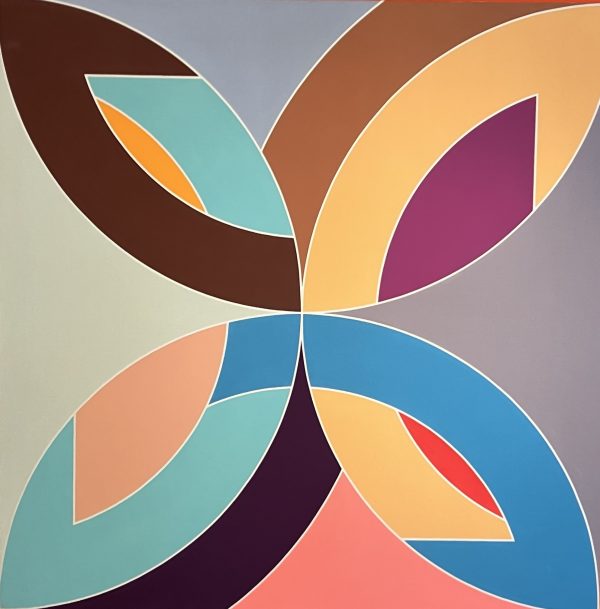
Upon entering the building I was immediately in front of Frank Stella’s Flin Flon, a visual masterpiece of geometric abstraction – a feast of clues and surprises interrogating the surface. Note: A follow up post on this amazing work imminent.
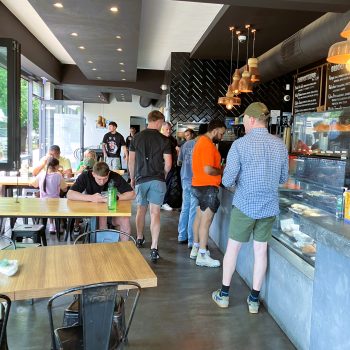
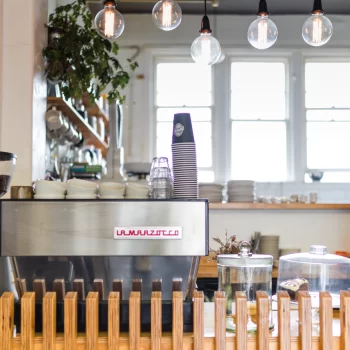
Right now, coffee before art; I made haste to the cafe and was instantly arrested by the wonderous angular ceiling, the quiet view of the garden and the inherent solitude.
Equally reassured: I’m going to love this!
_________________
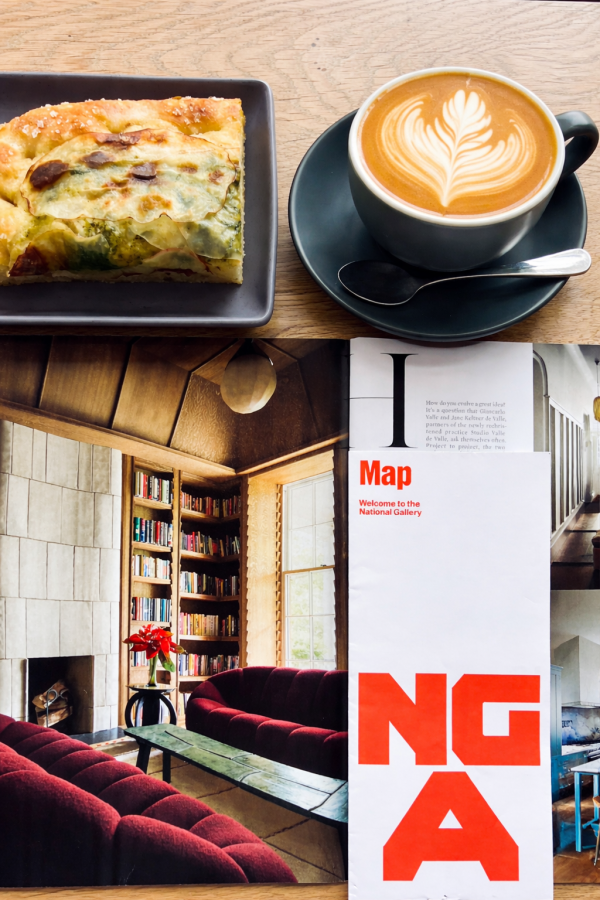
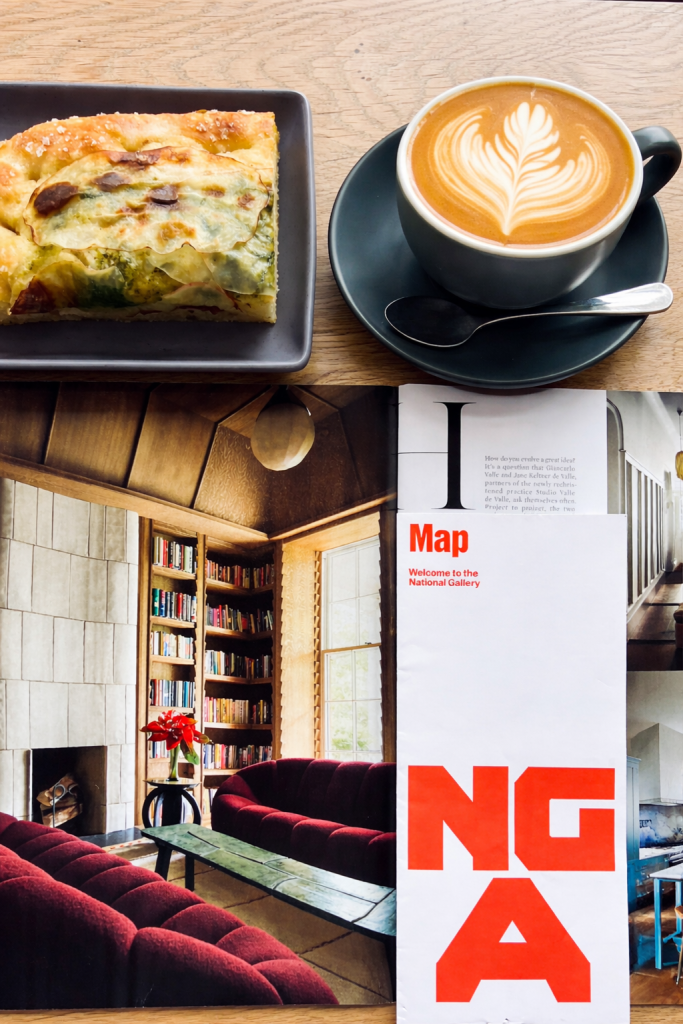
National Gallery Australia: NGA /Background interior: Studio Valle de Valle as seen in Arch Digest magazine
The daily ritual!
As soon as I spied the potato and leek foccacia in the image, I knew it would be unbelievably delicious (if not filling); along with a flat white, I revelled in my surrounds with an Arch Digest for company. The foccacia and coffee were delicious and consumed in a second. Of course I went back for more, another flat white and a triple chocolate brownie which I definitely did not need, but so good!
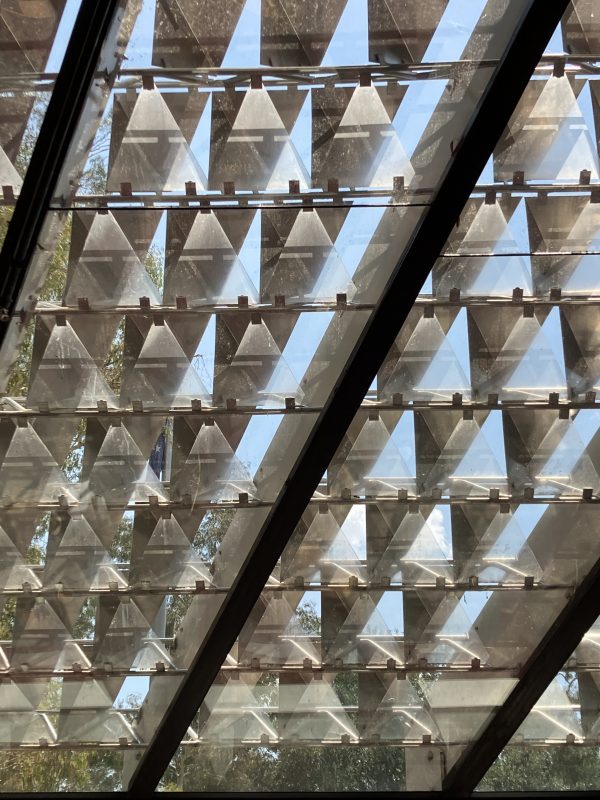
That ceiling!
____________
The ritual set me up for another three hours of art inhalation, and of course, more coffee and cake.
_________________
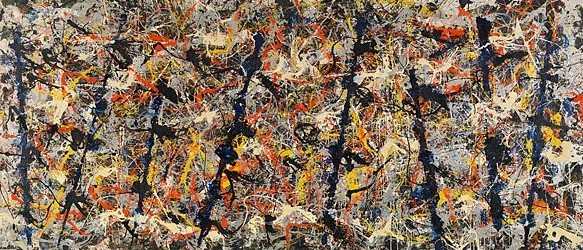
Blue Poles
Wandering around the NGA trying not to get diverted was almost impossible: in a dream I turned a corner and was ecstatic to come across Jackson Pollock’s Blue Poles. In awe of the story and the painting I took my time studying it.
In 1973 the then Australian Prime Minister Gough Whitlam was publicly condemned for agreeing to pay the exorbitant price of $1.3 million dollars to secure the painting for the NGA; 53 years later it is worth upwards of $300 million and in reality it is worth every penny.
When standing in front of it, not only is one struck by the size, but you could also believe Pollock was in an action painting trance such is the commanding resolution, distinctive patterns, innate language and cohesiveness; no mean feat given its size and the manner of paint application.
If it resembles anything it is like a wonderous phantasmagorical galexy of colour and form, or a cosmic light show of epic proportions.
_________________
A FEW OTHER IMPRESSIVE WORKS VIEWED!
_________________
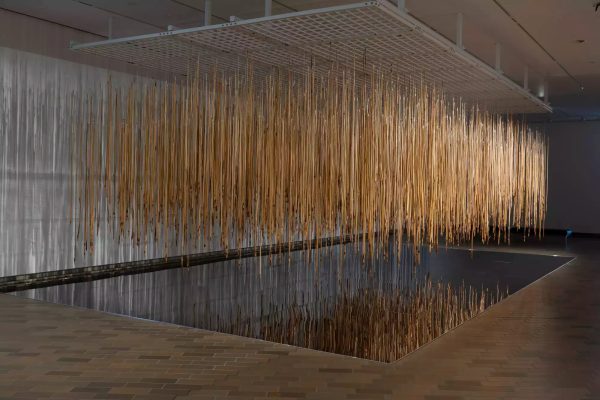
Kulata Tjuta: Tirkilpa installation completely stopped me in my tracks – incredibly powerful and atmospheric; individual spear images quietly reflecting off the water below. The density, colour and relative fragility of the spears, alongside the knowledge that they had been individually worked played out in a type of ghostly serenity within the gallery. Overwhelming in its beauty, size, reflections and provocation.
_________
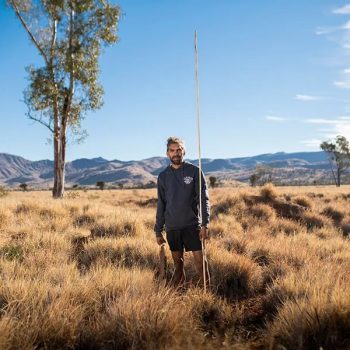
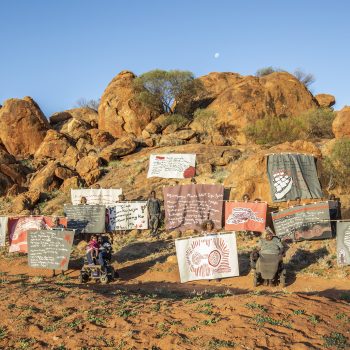
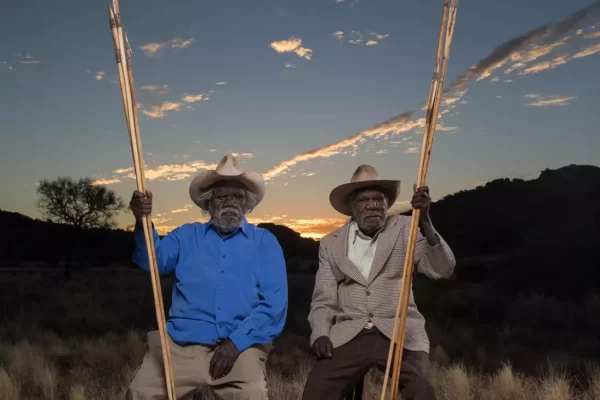
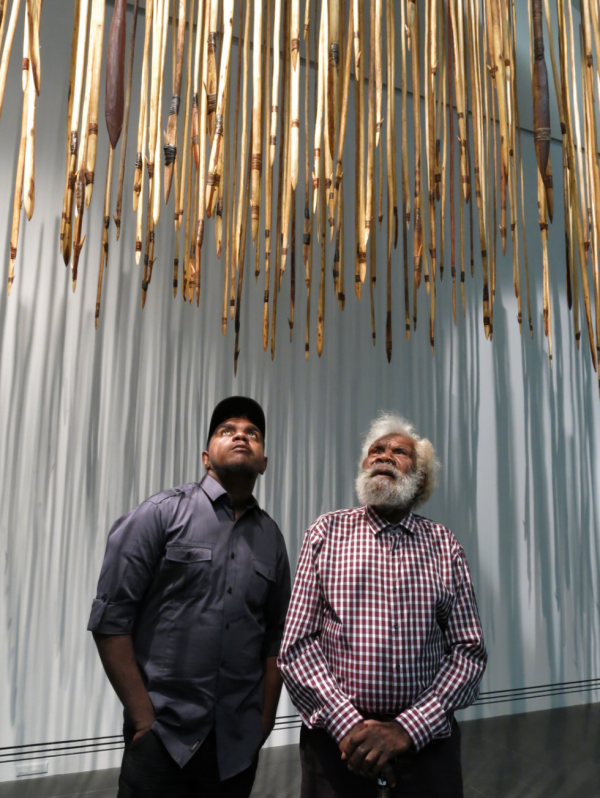
The Kulata Tjuta (Many Spears) project is a series of major installation-based works rooted in age-old wood craft traditions, knowledge and skills. Kulata Tjuta is an ongoing cultural maintenance project that shares the skills of spear making across generations.
Under the direction of senior men, young men are taught the skills of carving and kulata (spear) production as a means of cultural maintenance.
It features thousands of hand-carved spears, with a major 2025 installation at the NGA including 2,500 spears representing intergenerational knowledge, created using traditional tools and materials.
_________________
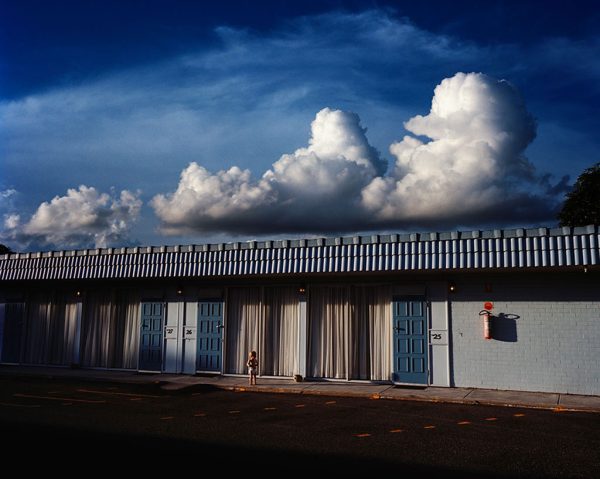
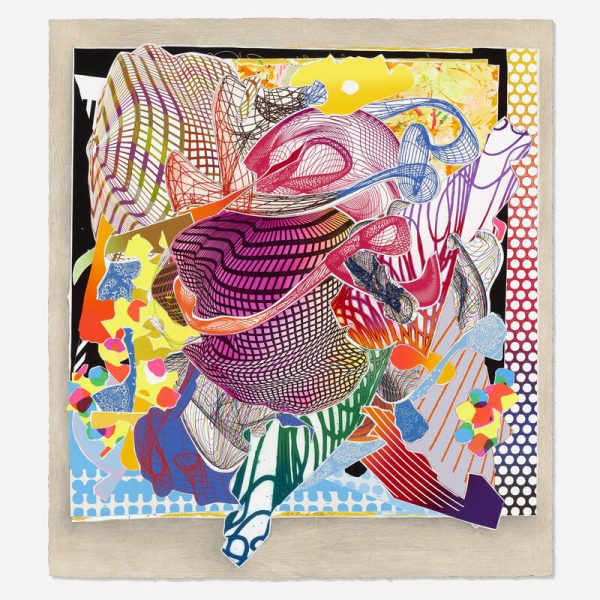
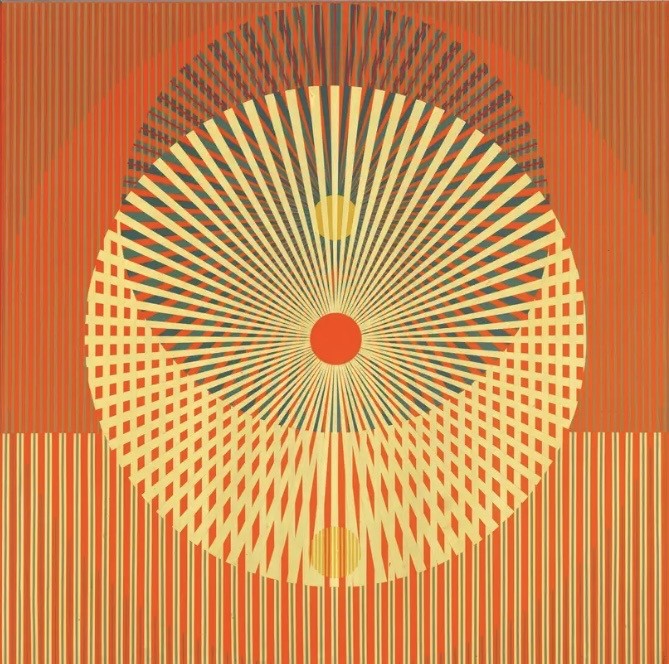
Within the confines of the NGA for a whole day made me want to move in there! Surrounded by the undreamed of creativity by artists from around the world with some of the best coming from Australia. Too much for one over-worked brain to encompass but at least I can come back for more, which I fully intend.
_________________
The Australian Government has invested $320 million in a once-in-a-generation Capital Works Program to protect and preserve the National Gallery’s heritage-listed building and the national collection for future generations.
This program will deliver a new café adjacent to the main entrance (opening Spring 2026), designed by award-winning architects Kerstin Thompson Architects…works that protect our heritage-listed building and the national collection; and the National Sculpture Garden project.
_________________
_________________
The design of Australia’s capital city, Canberra by Walter Burley Griffin and his wife, Marion Mahony Griffin
Walter Burley Griffin was the original designer of Canberra. He won the Federal Capital Design Competition, launched by King O’Malley, Minister for Home Affairs, in May 1911.
Burley Griffin had developed in a professional environment of radical European and North American architects. He was greatly influenced by the City Beautiful and Garden City movements which dominated town planning in the late 19th and early 20th century. Scholars have also detected a strong classical influence permeating Burley Griffin’s design of Canberra.
Burley Griffin’s wife, Marion Mahony Griffin, also an architect, collaborated with him on the design competition entry, and is known to have prepared the design drawings that accompanied the Burley Griffin entry.
Burley Griffin (entrant 29) was one of 137 entrants in the Federal Capital Design Competition. His original design drawings (on cotton cloth) as well as those of three other entrants noted by the judges – D Alf Agache (rated third); Griffiths Coulter and Caswell, an Australian firm (rated first in a minority report of the chairman); and Eliel Saarinen (rated second) – are held by the Archives in record series A710.
Marion Mahony Griffin (1871-1961), architect, designer, delineator, and artist, married Walter Burley Griffin (1876-1937), architect, landscape designer and urban planner in 1911. Their architectural practice spanned almost four decades on three continents.
Griffin had remarkable abilities as a landscape architect. From the material available to him in Chicago he was able to grasp the significance of Canberra’s regional setting, to completely visualise the site; to seize the strategic points; develop great vistas; adjust to subtle changes in relief; work with water, land and sky; and introduce as a common theme, the life-force of nature. The essential organising principles of Griffin’s plan were, however, his socio-political idealism and manifest symbolic intent.
In the Griffins’ concepts for Canberra it is clear that they had great respect for the surviving post-agricultural native vegetation. However Griffin was not a purist when it came to planting new vegetation. Certainly both the Griffins supplemented plant cover with native species, sometimes local and sometimes from elsewhere in Australia, but they also appreciated the beauty of plants from other countries.
It was the skilled blending of native and introduced plants into streetscapes, parks, reserves and gardens by local horticulturalists and botanists that has given the Capital, Canberra, both an Australian and international setting of outstanding interest and beauty.